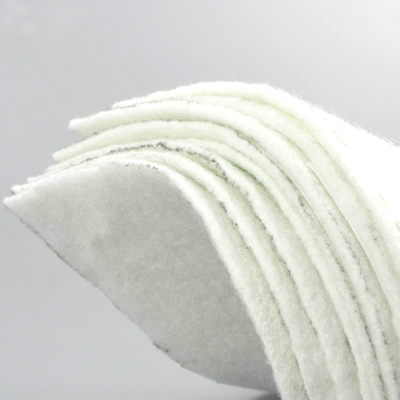
Application of Geomembrane and Bentonite Waterproof Blanket in Landfills
2026/03/24 11:02
Application of Geomembrane and Bentonite Waterproof Blanket in Landfills
With the rapid growth of urbanization and municipal solid waste, sanitary landfills remain one of the most widely used solid waste disposal methods worldwide. A reliable anti-seepage system is the core of landfill design, which aims to block leachate and landfill gas, protect groundwater and soil from pollution, and ensure long-term environmental safety. Geomembranes and geosynthetic clay liners (GCLs, commonly referred to as bentonite waterproof blankets) are the key barrier materials in modern landfill liner and cover systems, and their combined application has become the mainstream technical solution.
Geomembranes are high-polymer impermeable sheets, among which high-density polyethylene (HDPE) geomembranes are most commonly used in landfills. They feature ultra-low permeability, excellent chemical resistance, aging resistance, and mechanical strength. They can effectively block leachate and landfill gas, and are widely used as primary and secondary liners in landfill bottom systems, as well as barrier layers in final cover systems. HDPE geomembranes can adapt to differential settlement of waste and resist chemical corrosion from leachate, making them irreplaceable in rigid containment.
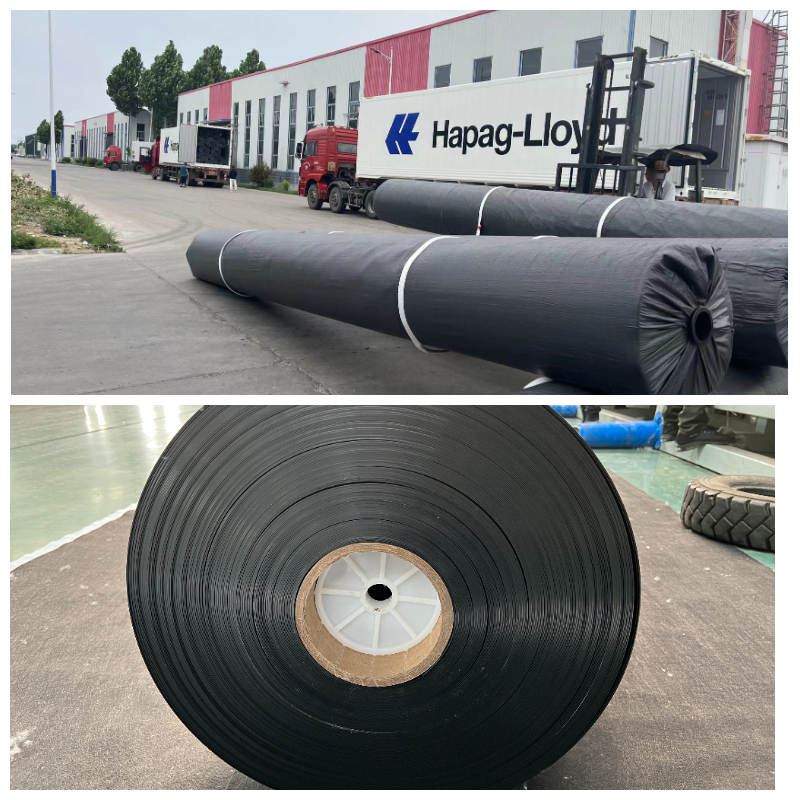
Geosynthetic clay liners (GCLs) are factory-manufactured composite materials composed of a layer of sodium bentonite sandwiched between geotextiles. When hydrated, bentonite swells rapidly to form an ultra-low permeability barrier with a permeability coefficient generally lower than 5×10⁻¹¹ m/s. GCLs are thin, lightweight, easy to construct, and have strong self-healing ability. They can adapt to uneven foundation deformation and fill micro-cracks, making them suitable for use as an auxiliary barrier layer under geomembranes or as an anti-seepage layer in landfill cover systems.
In practical engineering, the composite liner system combining geomembrane and GCL is widely adopted. Usually, GCL is laid on the compacted soil layer as the underlying buffer and secondary barrier, and HDPE geomembrane is laid on the upper layer as the primary barrier. This composite structure gives full play to the advantages of both: the geomembrane provides an absolute liquid-gas barrier, and the GCL provides backup anti-seepage, self-healing, and deformation adaptability. This composite system is used in the bottom liner, intermediate cover, and final cover of landfills, which can significantly reduce the risk of leakage and meet strict environmental protection standards.
In the bottom liner system, the composite structure of geomembrane + GCL is used to prevent leachate from infiltrating groundwater and control the escape of harmful gases such as methane. In the final cover system, it can reduce rainwater infiltration, reduce leachate production, and accelerate landfill stabilization. In leachate regulating tanks and hazardous waste landfills, this combination is also used to achieve double insurance of anti-seepage and meet higher environmental protection requirements.
Compared with traditional compacted clay liners, the combined application of geomembrane and GCL has obvious advantages: thinner thickness saves landfill space; faster construction speed shortens the construction period; stable performance and low permeability coefficient ensure long-term effectiveness; strong adaptability to terrain and settlement, suitable for complex geological conditions. These advantages make them the preferred anti-seepage scheme in modern landfill design and construction.
In conclusion, geomembranes and bentonite waterproof blankets (GCLs) play a vital role in landfill anti-seepage systems. Their composite application realizes efficient containment of leachate and landfill gas, protects ecological environment and water resources, and provides a reliable technical guarantee for the safe and standardized operation of landfills. With the continuous improvement of environmental protection standards, the application of these two materials will be more extensive, and the technical system will be more mature.