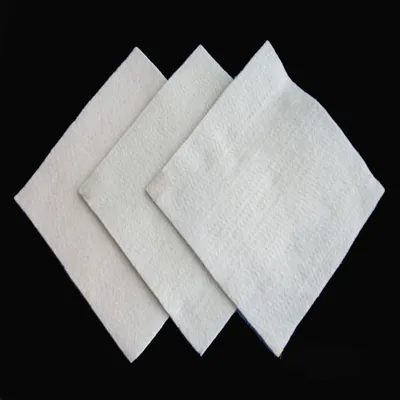
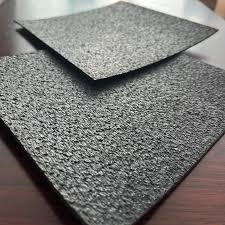
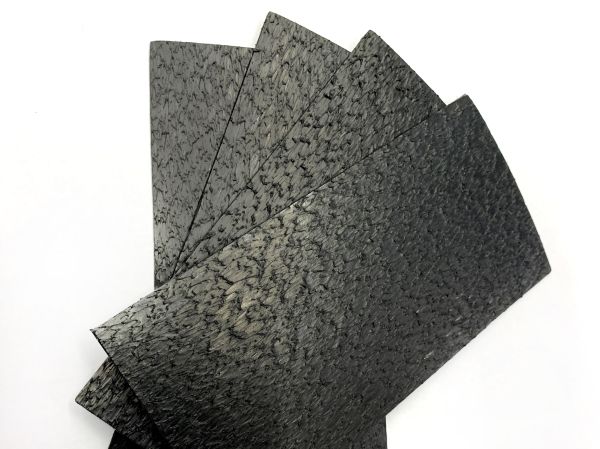
ASTM standard HDPE geomembrane
High interface friction values for steep slope design, increases landfill capacity.
Excellent resistance to hydrocarbons for secondary containment.
Excellent resistance to chemicals and most industrial effluents.
Outstanding environmental stress crack resistance, dimensional stability and thermal ageing characteristics.
Sheet dimensions allow fast installation.
Smooth salvaged edge option allows reliable seam welding and testing technology.
Description:
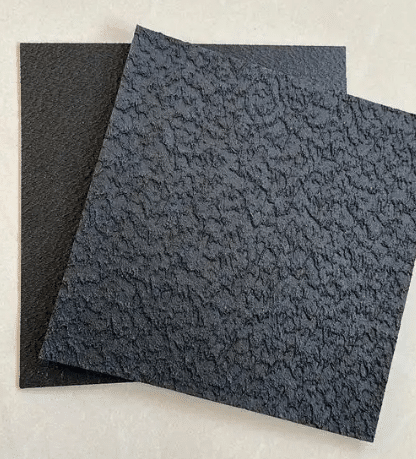
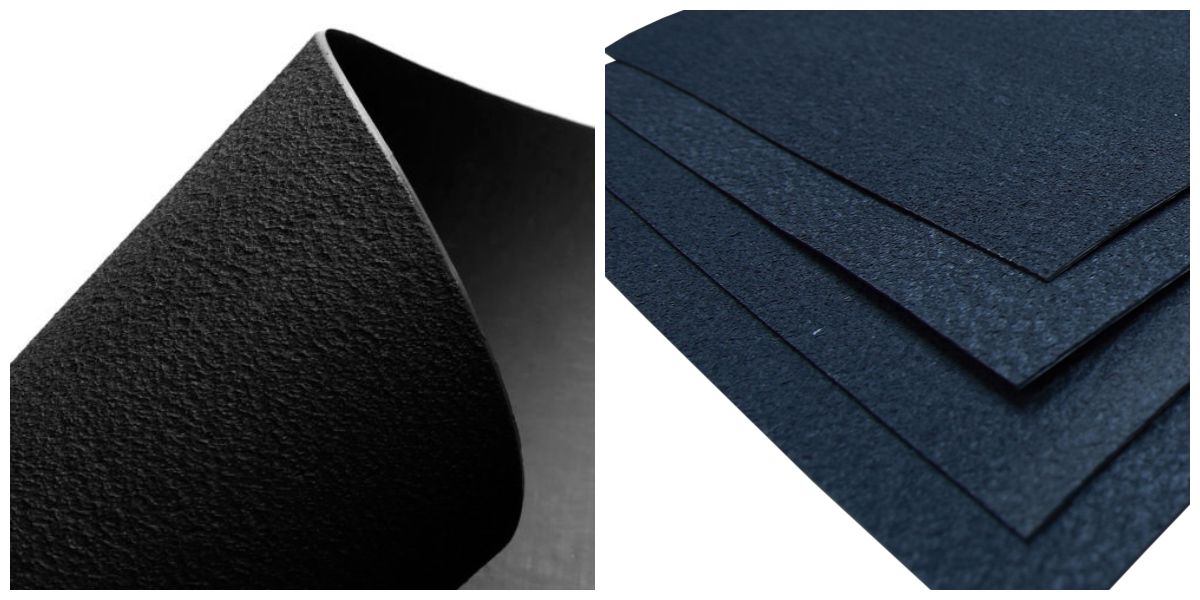
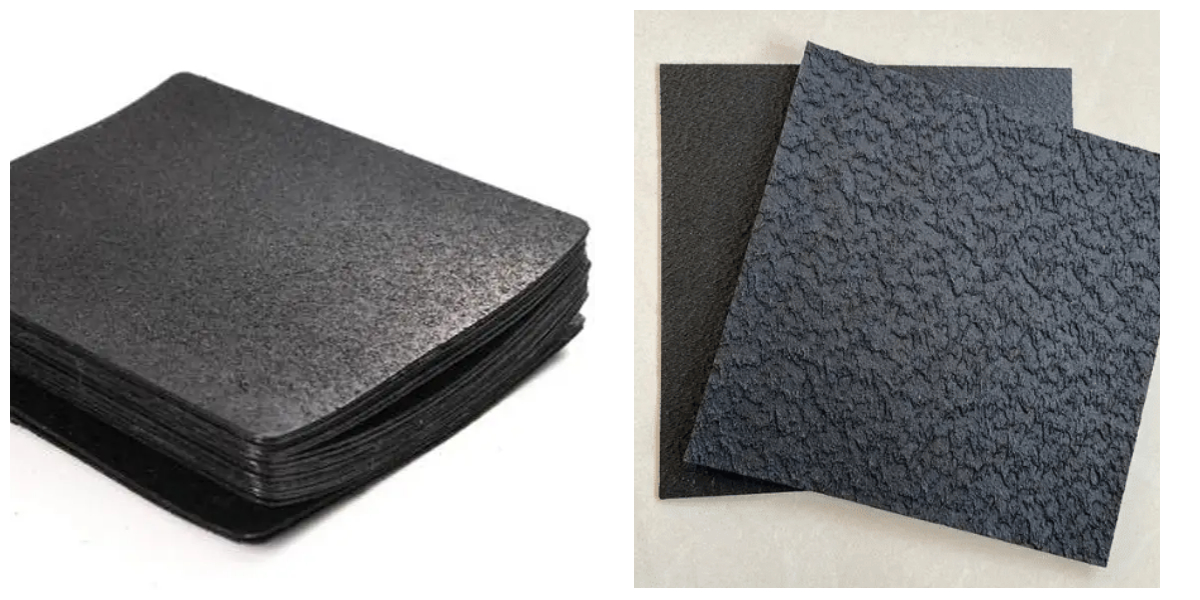
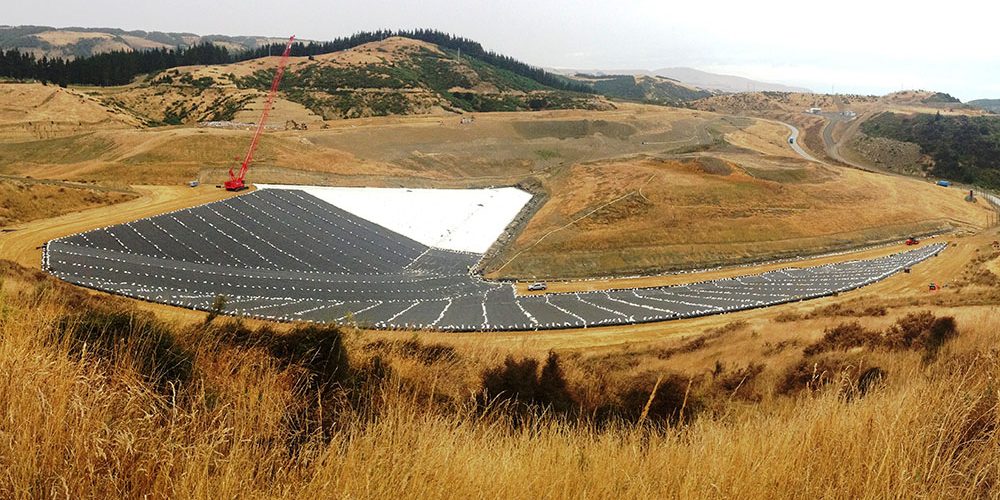
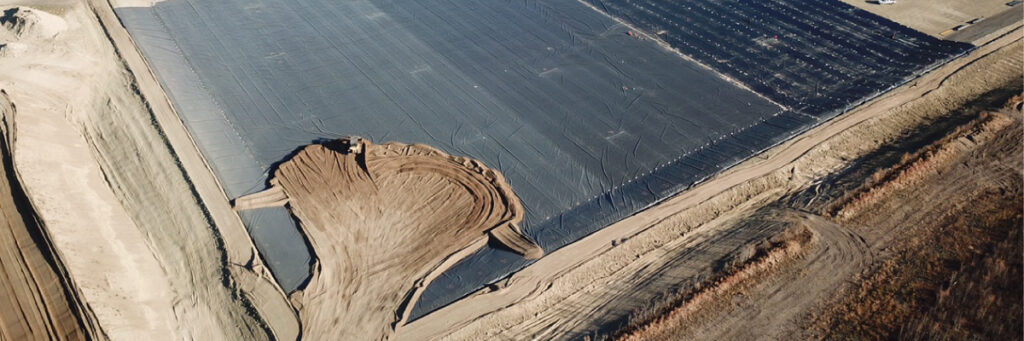
HDPE Textured is a High Density Polyethylene (HDPE) geomembrane that has a textured surface on one or both sides of the liner. It is typically used for mining and solid waste landfills. The textured surface provides increased friction angles for higher stability on steep slope applications. The increased friction significantly reduces slippage and provides greater void space capacity.
Our textured geomembrane liner is able to provide either nitrogen induced or spray-on textured geomembrane. Asperity measurement is in accordance with GRI-GM12. Test properties and test frequency is in accordance with GRI-GM13 specifications.
Features & Benefits
APPLICATION:
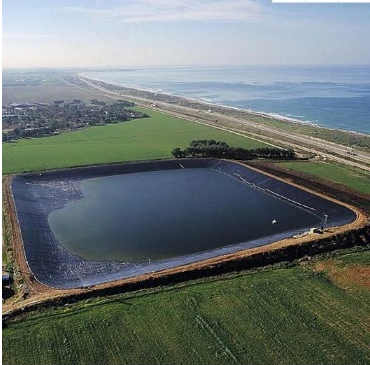
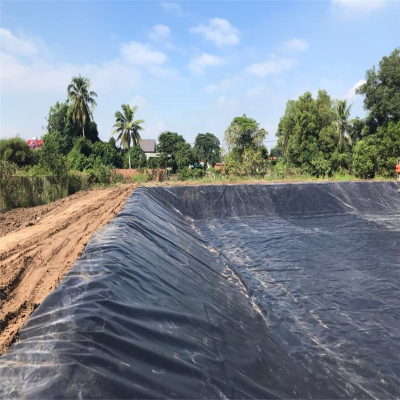
Landfill:Textured Geoshield High Density Polyethylene is often specified as the primary liner. The geomembrane provides a highly impermeable barrier to gases and liquids, resistant to corrosion and most chemicals. The textured surface provides increased friction angles for higher stability on steep slope applications – significantly reducing slippage and allowing for both design flexibility and greater capacity.
Secondary Containment Applications: HDPE has excellent chemical resistance to substances including acids, alkalis and hydrocarbons.
Petrochemical plants
Fuel tank bunding
Electrical transformer bunding
Tank farms
Below ground fuel tanks
Contaminated sites
Acid tank liners (primary and secondary)
Specification:
Test Property | Test Method Unit | Minimum Average Roll Value | |||
1.0mm | 1.5mm | 2.0mm | |||
Thickness(min.ave) ● lowest individual of 10 values | ASTM D 5199 | % | nom-10 | nom-10 | nom-10 |
Asperity Height mils | ASTM D 7466 | mm | 0.40 | 0.40 | 0.40 |
Formulated Density(min.ave) | ASTM D1505/D792 | g/cc | 0.94 | 0.94 | 0.94 |
Tensile Properties(min.ave) | ASTM D 6693 | ||||
● yield strength | kN/m | 15 | 22 | 29 | |
● break strength | kN/m | 10 | 16 | 21 | |
● yield elongation | % | 12 | 12 | 12 | |
● break elongation | % | 100 | 100 | 100 | |
Tear Resistance(min.ave) | ASTM D 1004 | N | 125 | 187 | 249 |
Puncture Resistance(min.ave) | ASTM D 4833 | N | 267 | 400 | 534 |
Stress Crack Resistance | ASTM D 5397 | hr | 500 | 500 | 500 |
Carbon Black Content(range) | ASTM D 4218 | % | 2.0-3.0 | 2.0-3.0 | 2.0-3.0 |
Carbon Black Dispersion | ASTM D 5596 | For 10 different views:9 in Categories 1 or 2 and 1 in Category 3 | |||
Oxidative Induction Time(OIT)(min.ave) (a)Standard OIT (b)High Pressure OIT |
ASTM D 8117 ASTM D 5885 |
min min |
100 400 |
100 400 |
100 400
|
Oven Aging at 85℃ (a)Standard OIT(min.ave)-retained after 90 days (a)High PressureOIT(min.ave)- retained after 90 days
| ASTM D 5721
ASTM D 8117
ASTM D 5885
| %
%
%
|
55
80 |
55
80 |
55
80 |
UV Risistance High Pressure OIT(min.ave)- retained after 1600hrs |
ASTM D 5885 |
% |
50 |
50 |
50 |
Low temperature brittleness | ASTM D 746 | ℃ | -77 | -77 | -77 |
Dimensional Stability | DIN 53377 | % | ±2 | ±2 | ±2 |