
Application of HDPE Geomembrane in Water Conservancy Engineering
With the continuous development of water conservancy engineering construction, the requirements for anti-seepage, anti-corrosion and durability of engineering materials are constantly improving. High-Density Polyethylene (HDPE) geomembrane, as a high-performance polymer synthetic material, has been widely used in various water conservancy projects due to its excellent comprehensive properties. It effectively solves key technical problems such as seepage, soil erosion and structural damage in water conservancy projects, and provides a reliable material guarantee for the safe operation and long-term service of the projects.
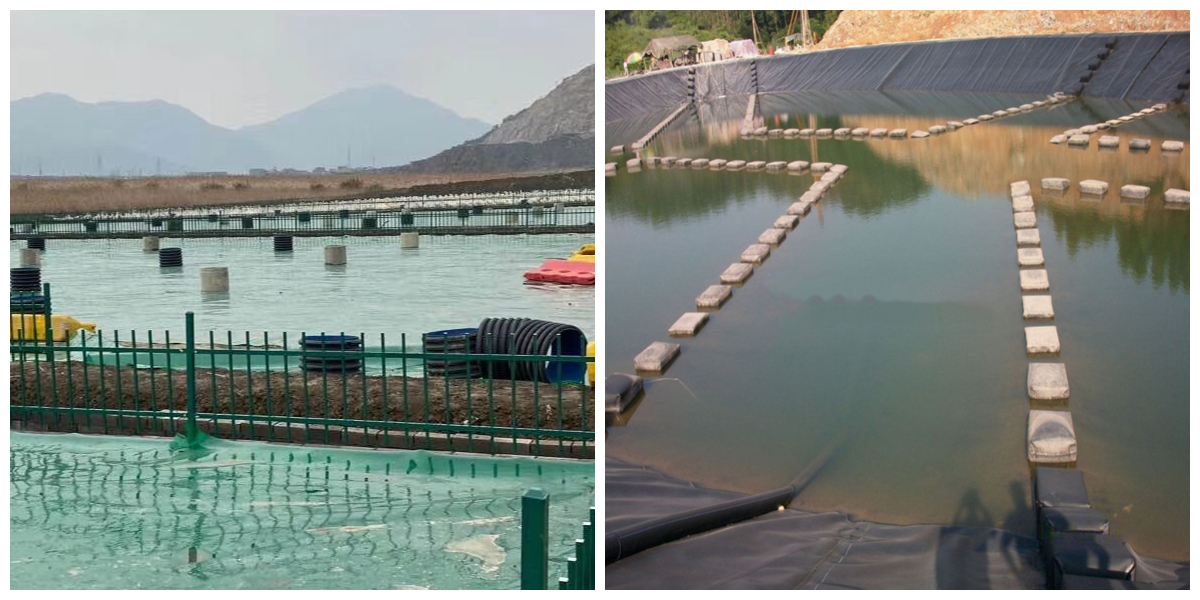
HDPE geomembrane is a kind of impermeable material made of high-density polyethylene resin through blow molding or calendering. It has a series of outstanding performance advantages that are highly compatible with the needs of water conservancy engineering. Firstly, it has ultra-low permeability, with a vertical permeability coefficient as low as 10⁻¹³ cm/s, which is equivalent to the anti-seepage effect of a 600-meter-thick clay layer, far superior to traditional anti-seepage materials such as clay and concrete. This feature can fundamentally block the seepage of water, avoid the waste of water resources and the damage to the engineering structure caused by seepage. Secondly, it has excellent chemical stability and corrosion resistance, which can resist the erosion of various chemical substances in soil and water, including high-concentration salt water, sewage and other corrosive media, and maintain stable performance in harsh environments. In addition, HDPE geomembrane has high tensile strength, good ductility and strong adaptability to deformation. Its elongation at break can reach more than 700%, which can well adapt to the uneven settlement of the foundation and the deformation of the engineering structure, and avoid damage caused by stress concentration. At the same time, it is light in weight, convenient in transportation and construction, simple in laying process, and can significantly shorten the construction period and reduce the engineering cost compared with traditional materials.
In practical water conservancy engineering, HDPE geomembrane has a wide range of applications, covering key links such as reservoir anti-seepage, channel lining, dangerous reservoir reinforcement and water storage pond construction, and has achieved remarkable application effects in various scenarios.
In reservoir engineering, seepage is one of the key hidden dangers affecting the safety of the dam. HDPE geomembrane is often used as the core anti-seepage material for the upstream dam slope and dam foundation of the reservoir to form a continuous and dense anti-seepage system with the dam foundation anti-seepage wall and dam shoulder concrete toe slab. For example, in a hydropower station face rockfill dam with a height of 160 meters, the permeability coefficient of the dam filling gravel is as high as 10⁻¹ cm/s. The design adopts 2.0mm thick HDPE geomembrane as the main anti-seepage material, with a maximum laying length of 200 meters. To protect the membrane from damage, a 400g/m² long-fiber non-woven geotextile is laid under the HDPE geomembrane as a protective layer, and an 1800g/m² short-fiber needle-punched non-woven geotextile is laid on it as a ballast layer. After strict on-site welding quality control, the joint peel strength and shear strength of the HDPE geomembrane are more than 90% of the base material, and the permeability coefficient is as low as 10⁻¹² cm/s. After impoundment, the monitoring shows that the dam seepage flow and phreatic line are controlled within the design allowable range, and the dam deformation is less than the expected value, ensuring the safe operation of the reservoir.
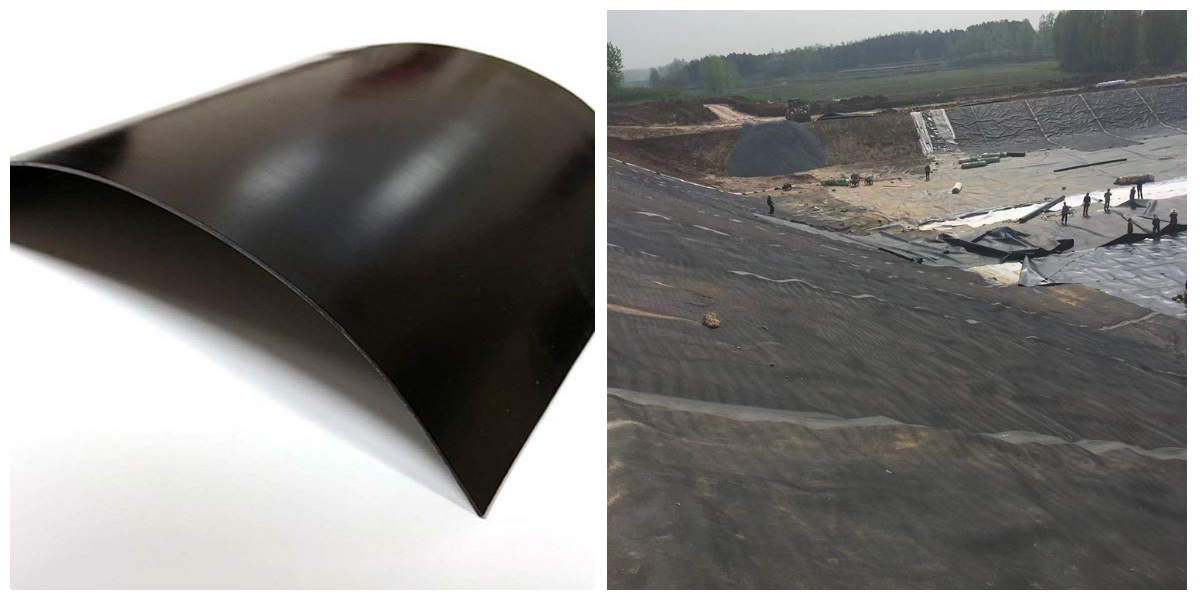
In channel engineering, especially large-scale irrigation and water conveyance channels, the traditional clay or concrete lining has the defects of high seepage risk, long construction period and high cost. The application of HDPE geomembrane lining can significantly improve the anti-seepage performance of the channel and reduce water loss. Taking a 450km long main water conveyance channel in an irrigation area as an example, the channel is designed with a flow rate of 120 m³/s and an trapezoidal section with a slope of 1:2.5. Considering the complex geological conditions along the channel, the design adopts a geotextile/HDPE geomembrane composite lining for full-line anti-seepage. The specific method is: after channel excavation, first lay a 600g/m² long-fiber non-woven geotextile as the protective layer of the HDPE geomembrane; then lay a 2.0mm thick HDPE geomembrane, and bond or weld the overlapping area; finally, lay an 800g/m² non-woven geotextile on the membrane to play a protective and ballast role. After years of operation, the monitoring data shows that the permeability coefficient of the lining is as low as 10⁻¹³ cm/s, and no seepage accidents have occurred, which not only improves the water use efficiency but also reduces the maintenance cost of the channel.
In the reinforcement of dangerous reservoirs, HDPE geomembrane also plays an irreplaceable role. There are a large number of old reservoirs in China, which generally have problems such as serious seepage and deformation due to the limitations of the design standards and construction conditions at that time. Using HDPE geomembrane to reinforce dangerous reservoirs can make full use of the original engineering facilities, reduce land occupation and resettlement, shorten the construction period and reduce the project cost. For example, a large plain reservoir built in the 1950s has a total storage capacity of 120 million m³ and a maximum dam height of 21 meters. Due to long-term operation and poor management, the dam has serious seepage and widespread bank landslides, becoming a national Class III dangerous reservoir. The reinforcement design adopts an HDPE geomembrane composite anti-seepage system on the upstream dam slope. A 2mm thick HDPE geomembrane is first laid, and a 1200g/m² long-fiber non-woven geotextile protective layer is laid on it. The HDPE geomembrane at the dam shoulder is connected to the bank slope through an anchor trench, and the dam toe is covered with concrete ballast. After more than a year of reinforcement construction, all safety indicators of the reservoir have met the standard requirements, and the dam seepage flow has been significantly reduced.
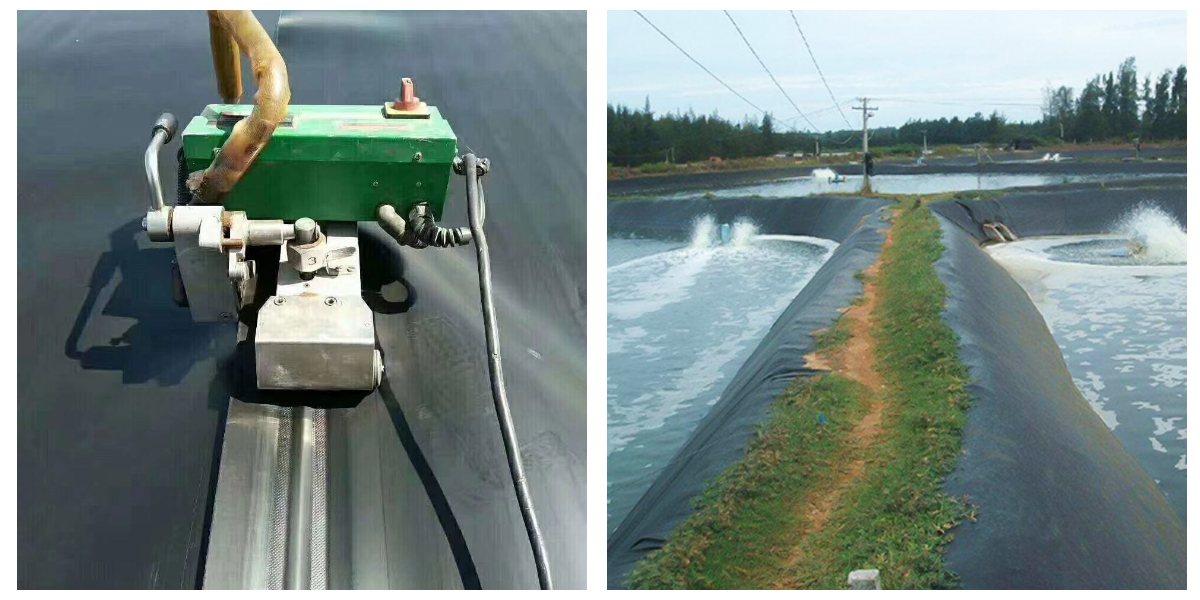
In addition to the above scenarios, HDPE geomembrane is also widely used in water conservancy projects such as water storage ponds, sewage treatment pools and salt ponds. Its excellent anti-seepage performance can prevent the leakage of sewage and harmful substances, protect the surrounding soil and groundwater environment; in salt ponds, it can prevent the loss of brine and improve the efficiency of salt production. It should be noted that the application effect of HDPE geomembrane in water conservancy engineering is closely related to the quality of laying and welding. During construction, it is necessary to strictly clean the foundation, remove sharp objects such as stones and weeds that may pierce the membrane, lay the membrane smoothly without wrinkles, and use professional tools to weld the overlapping parts to ensure that the joint strength meets the requirements. After construction, a comprehensive inspection should be carried out to repair any damage in time to ensure the integrity and continuity of the anti-seepage system.
In conclusion, HDPE geomembrane, with its ultra-low permeability, excellent corrosion resistance, strong deformation adaptability and convenient construction, has become an indispensable core material in modern water conservancy engineering. Its wide application not only solves the key anti-seepage and anti-corrosion problems in water conservancy projects but also reduces the engineering cost, shortens the construction period and improves the service life of the projects. With the continuous progress of material technology and the continuous improvement of engineering construction standards, HDPE geomembrane will be applied in more water conservancy projects, and its application technology will be further optimized and improved, making greater contributions to the sustainable development of water conservancy engineering.
If you have any geomembrane procurement, construction and technical consultation needs, please feel free to contact me via WhatsApp: +86 15553403434. We can provide professional geomembrane selection, on-site welding guidance and overall anti-seepage engineering solutions to meet different project construction requirements.


