Membrane Liners
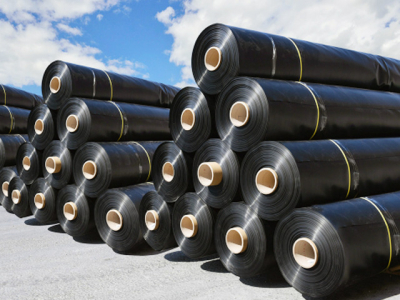
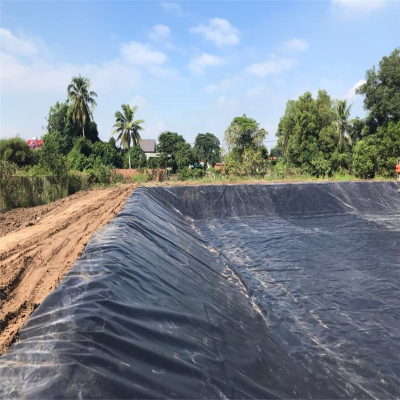
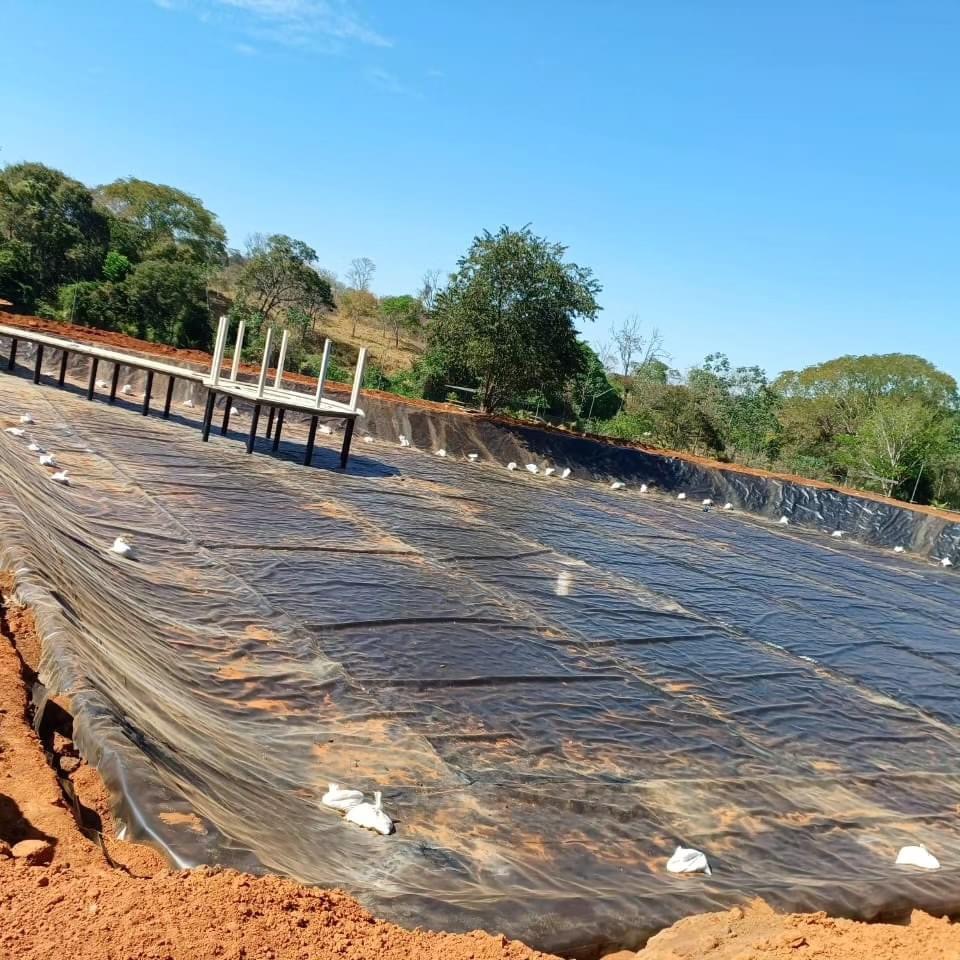
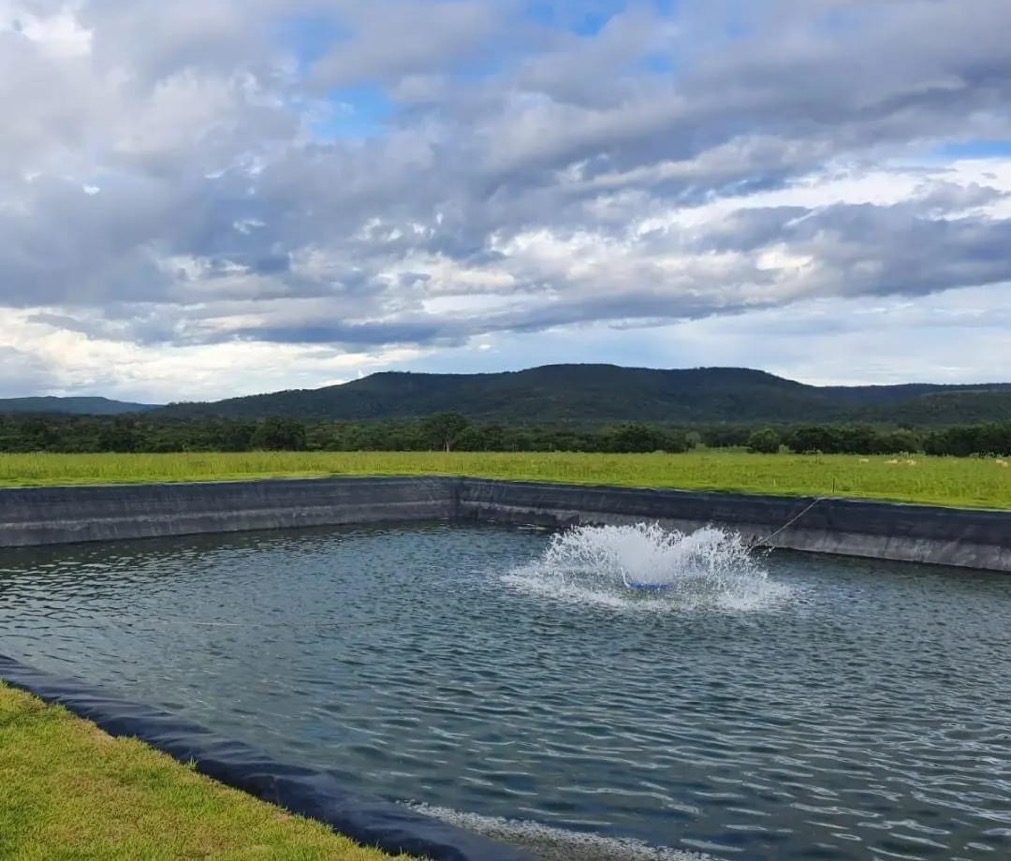
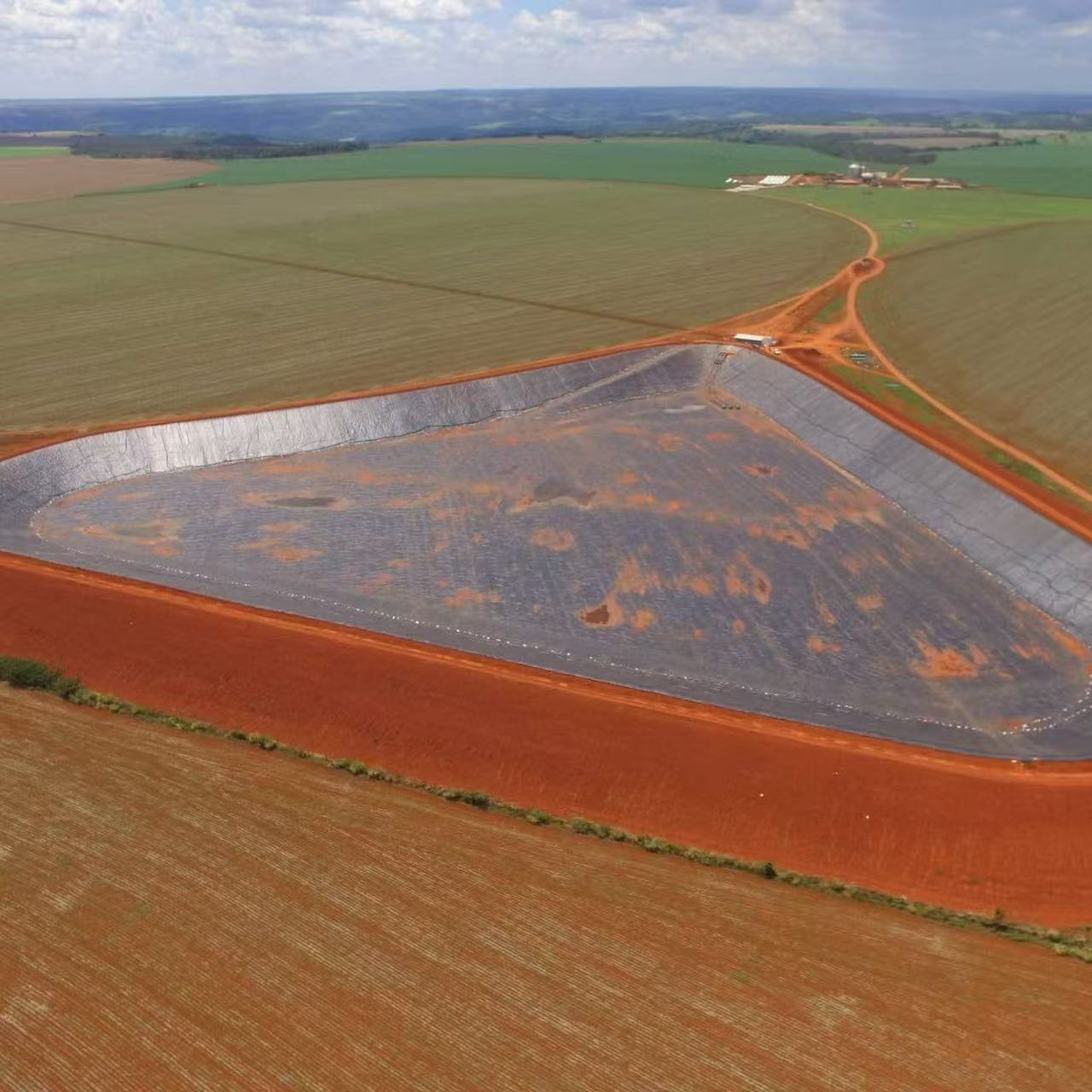
Membrane liners are synthetic barriers made from high-density polyethylene (HDPE) resins. They are widely applied in construction and environmental protection projects for their exceptional chemical resistance, long-lasting durability, superior flexibility, and excellent impermeability. Typical uses include lining landfills, ponds, reservoirs, and other containment systems.
Excellent Chemical Resistance – Effectively resists a broad range of acids, alkalis, and industrial chemicals.
Exceptional Durability – Provides long-term performance with outstanding resistance to weathering and aging.
Superior Flexibility – Easily conforms to uneven surfaces and complex structures, making installation simple and efficient.
Excellent Impermeability – Ensures dependable leakage prevention and environmental safety.
Wide Range of Applications – Ideal for use in landfills, water ponds, reservoirs, and various containment or waterproofing projects.
Membrane liners are engineered synthetic sheets made from high-quality HDPE resins. They are extensively used as liners or barriers in construction and environmental protection projects due to their outstanding chemical resistance, superior durability, excellent flexibility, and remarkable impermeability. Common applications include landfill liners, pond seals, and various containment systems.
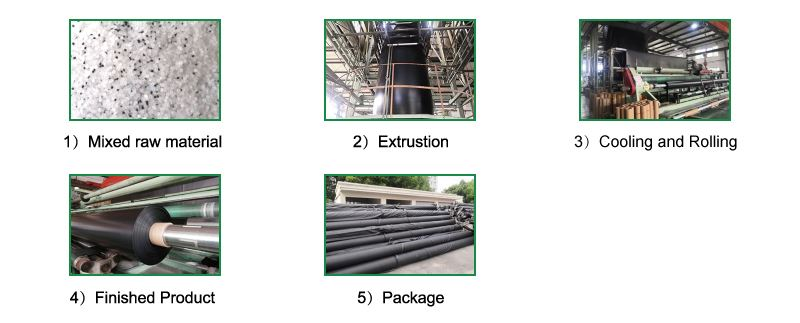
Flow of Production
Benefits of Membrane Liners
Using membrane liners provides numerous advantages across a wide range of applications, thanks to their distinctive material properties and excellent performance:
UV Resistance: HDPE geomembranes contain 2–3% carbon black, which serves as an effective UV stabilizer. This additive absorbs ultraviolet radiation, preventing polymer degradation and significantly extending service life in exposed conditions such as landfill covers and pond liners.
Impermeability: HDPE liners deliver outstanding impermeability against liquids, gases, and solids. They act as dependable barriers to block contaminants, leachate, and hazardous materials from entering the surrounding environment—essential for applications like landfills, wastewater treatment plants, and industrial containment systems.
Chemical Resistance: HDPE liners provide exceptional resistance to various chemicals, including acids, alkalis, and organic solvents. This superior chemical stability ensures reliable performance and long-term protection in corrosive or chemically aggressive environments.
Durability and Longevity: Known for their superior strength, HDPE liners resist punctures, tears, and UV damage. Their robustness allows them to perform reliably under harsh environmental conditions for many years, minimizing maintenance and replacement costs.
Flexibility and Easy Installation: HDPE liners are highly flexible, allowing them to adapt to uneven surfaces and complex terrain. This flexibility simplifies installation, reduces labor costs, and enables efficient coverage of large areas. Prefabrication into large panels or rolls further streamlines deployment and minimizes onsite welding.
Cost-Effectiveness: HDPE liners represent a cost-efficient solution for containment and environmental protection. Their long lifespan, minimal upkeep, and strong performance under demanding conditions lead to reduced overall project costs throughout their service life.

Parameters
S/N | Item | Index | ||||||
Thickness mm | 0.75 | 1.00 | 1.25 | 1.50 | 2.00 | 2.50 | 3.00 | |
1 | Density g/cm3 | ≥0.940 | ||||||
2 | Tensile yield strength (vertical and horizontal) N/mm | ≥11 | ≥15 | ≥18 | ≥22 | ≥29 | ≥37 | ≥44 |
3 | Tensile breaking strength (vertical and horizontal) N/mm | ≥20 | ≥27 | ≥33 | ≥40 | ≥53 | ≥67 | ≥80 |
4 | Elongation (vertical and horizontal) % | - | - | - | ≥12 | |||
5 | Elongation at break (vertical and horizontal) % | ≥700 | ||||||
6 | Tearing load at right angle (vertical and horizontal) N | ≥93 | ≥125 | ≥160 | ≥190 | ≥250 | ≥315 | ≥375 |
7 | Anti-puncture strength N | ≥240 | ≥320 | ≥400 | ≥480 | ≥540 | ≥800 | ≥960 |
8 ' | Tensile load stress cracking (tensile method of dead load of the cut) h | _ | ≥300 | |||||
9 | Carbon black content % | 2.0~3.0 | ||||||
10 | Carbon black dispersion | The number of Level 3 among 10 data is not more than one; Level 4 and Level 5 are not allowed. | ||||||
Oxidation induction time (OIT) min | Oxidation induction time under normal pressure ≥100 | |||||||
11* | Oxidation induction time under disjoining pressure ≥400 | |||||||
12 | 85°C thermal aging (retention rate of OIT under normal pressure after 90d) % | ≥55 | ||||||
13a | Ultraviolet resistance (retention rate of OIT after 1600h ultraviolet irradiation) | ≥50 | ||||||
Note: Technical performance index of thickness specification not listed in the table shall be implemented according to interpolation method. | ||||||||
For two indexes of Item 11 and Item 13, select one from retention rate of OIT under normal pressure and retention rate of OIT under high pressure and carry out the test. | ||||||||
Applications
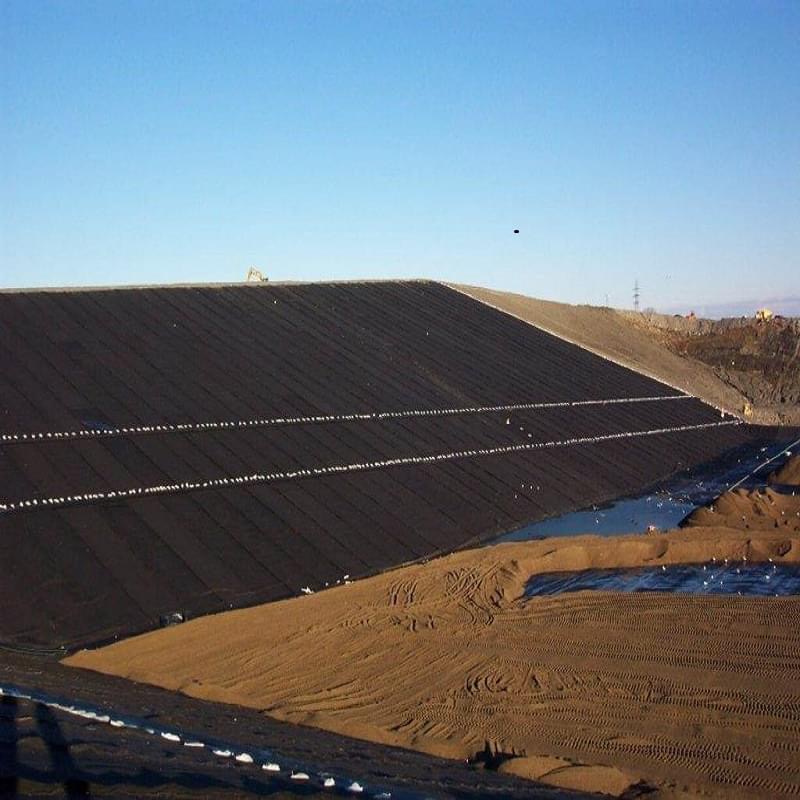
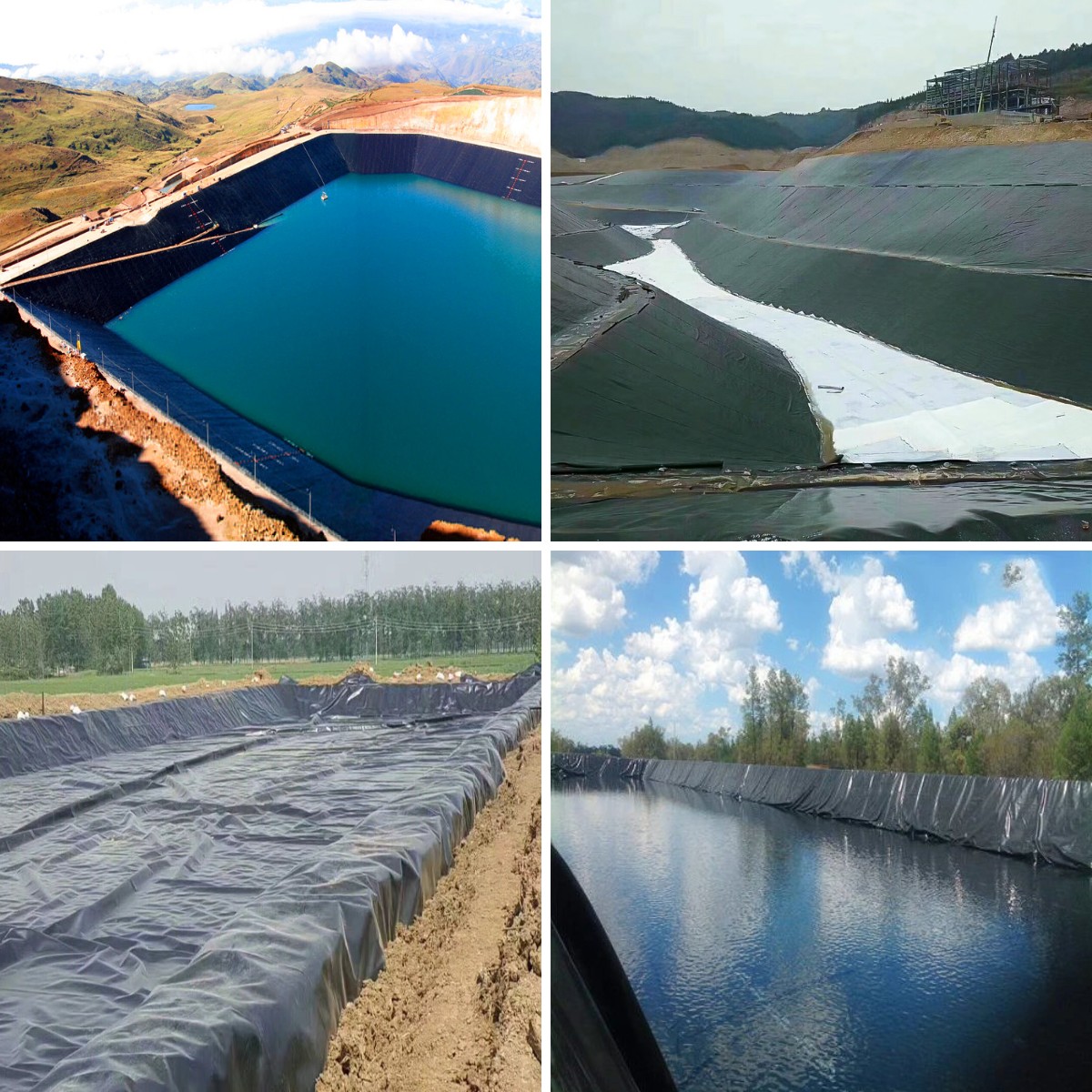
Landfills: Geomembranes are widely used as liners in landfills.
Mining heap leach & slag tailing ponds
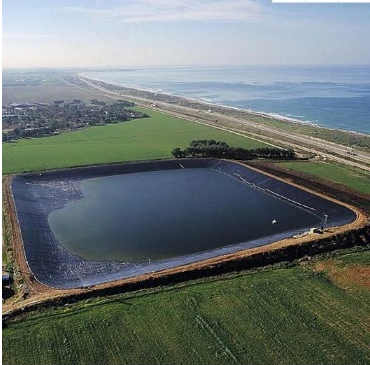
Pond Liners: Geomembranes are used in the construction of ponds, reservoirs, and lagoons for water storage, wastewater treatment, and aquaculture.
Secondary Containment: Geomembranes are employed in secondary containment systems around storage tanks, pipelines, and industrial.
Wastewater Treatment: Geomembranes are used in the construction water treatment plants.Irrigation ponds, canals, ditches & water reservoirs
Our geomembranes are also used for floating covers and bio-gas containment.
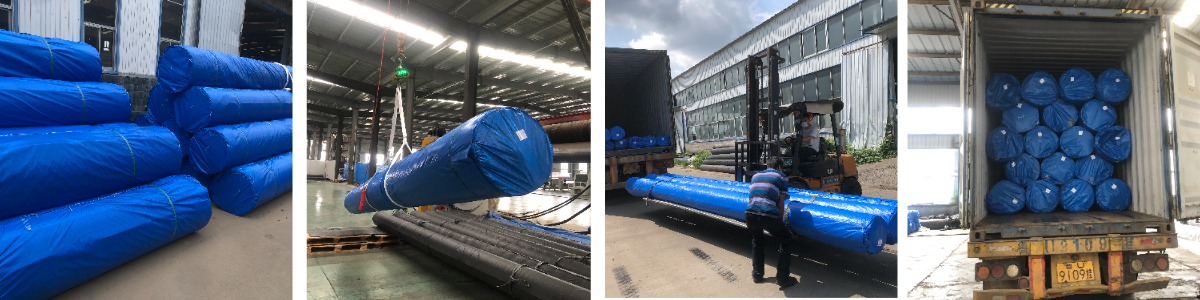
Packaging&Shipping