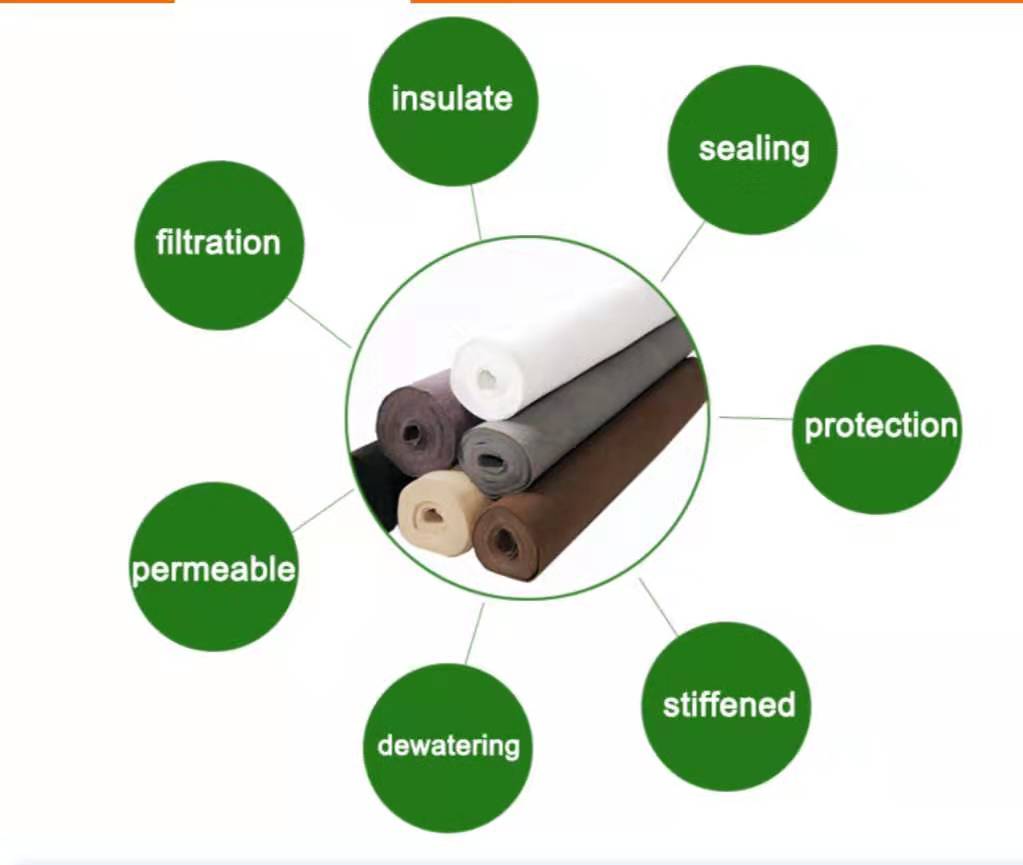
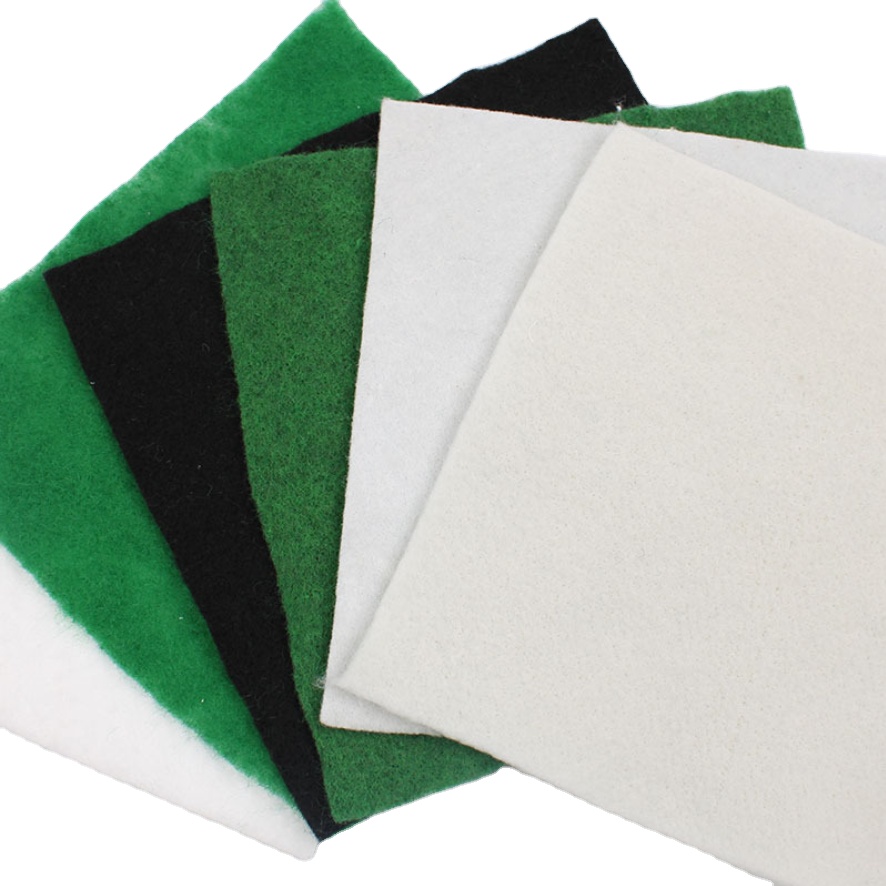
non woven geotextile for drainage
Superior Tensile Strength: Higher breaking strength and modulus than polypropylene alternatives
Exceptional UV Resistance: Maintains performance under prolonged sunlight exposure
Chemical & Biological Stability: Resistant to acids, alkalis, and microbial degradation,
Dimensional Stability: Low shrinkage rate (≤3%) even under high temperature or moisture
Eco-Friendly Option: Recycled PET geotextiles reduce plastic waste, aligning with global sustainability initiatives
1. Raw Material Selection: High-tenacity polyethylene terephthalate (PET) chips (recycled or virgin) are chosen for superior strength, mixed with UV stabilizers and anti-aging additives.
2. Melting & Extrusion: The PET chips are melted at 260-280℃ in a twin-screw extruder, then extruded through spinnerets to form continuous filaments (for woven/non-woven types).
3. Web/Fabric Formation:
◦ Non-woven: Filaments are laid into a web and bonded via needle-punching (mechanical interlocking) or thermal bonding.
◦ Woven: Filaments are woven into a dense fabric using plain, twill, or satin weaves for enhanced structural stability.
4. Finishing Processes: The fabric undergoes heat setting to improve dimensional stability, followed by calendering (for thickness adjustment) and edge sealing to prevent fraying.
5. Quality Control & Rolling: Inspected for tensile strength, elongation, permeability, and UV resistance; qualified products are rolled into standard sizes and packaged.
2. Key Advantages
• Superior Tensile Strength: Higher breaking strength and modulus than polypropylene alternatives, ideal for heavy-load reinforcement projects.
• Exceptional UV Resistance: Maintains performance under prolonged sunlight exposure (suitable for outdoor applications with long service life).
• Chemical & Biological Stability: Resistant to acids, alkalis, and microbial degradation, ensuring durability in harsh soil/water environments.
• Dimensional Stability: Low shrinkage rate (≤3%) even under high temperature or moisture, avoiding deformation during construction.
• Eco-Friendly Option: Recycled PET geotextiles reduce plastic waste, aligning with global sustainability initiatives.
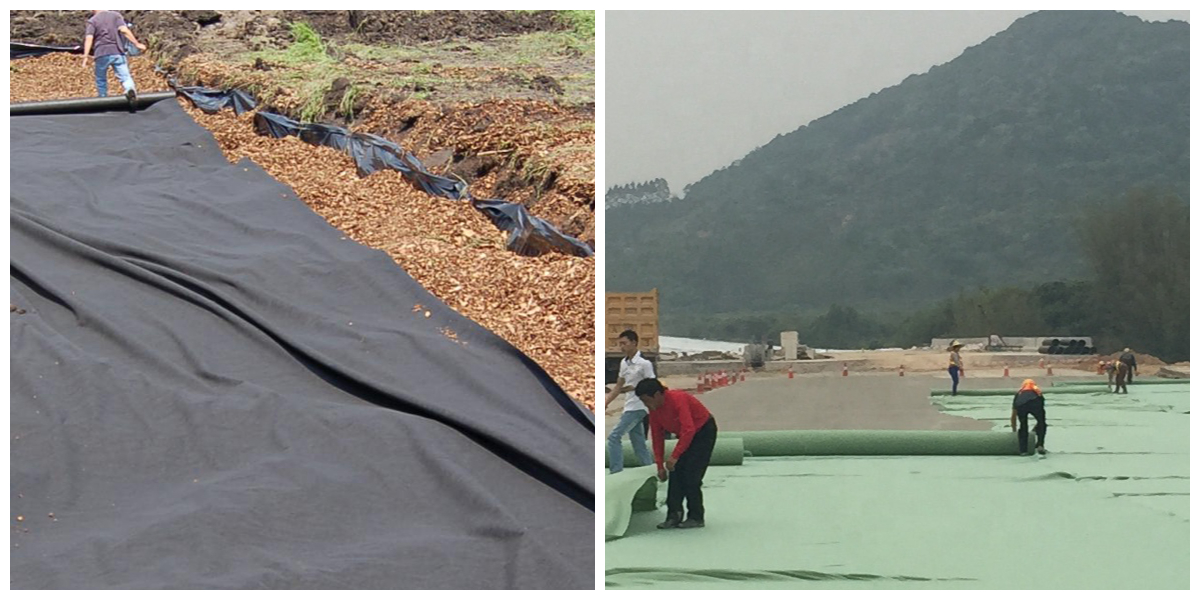
3. Application Fields
• Infrastructure Projects: Highway/railway subgrade reinforcement, bridge approach stabilization, and airport pavement base enhancement.
• Hydraulic & Coastal Engineering: Coastal revetment, riverbank protection, dam filtration layers, and tidal flat reclamation.
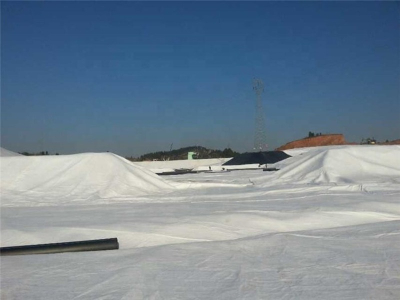
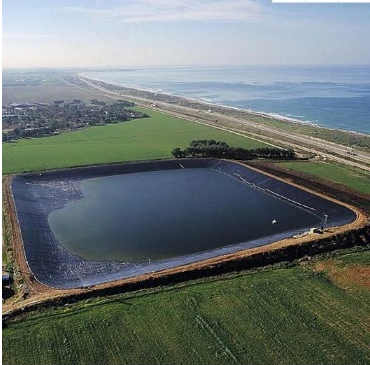
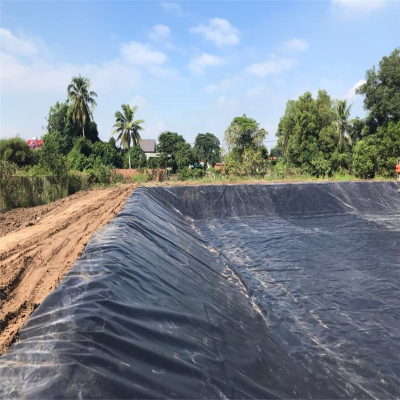
• Environmental Protection: Landfill leachate collection systems, mine tailing remediation, and sewage treatment plant filtration.
• Construction & Civil Works: Retaining wall reinforcement, slope stabilization, and basement waterproofing underlays.
• Green Engineering: Vegetation slope protection (combined with geogrids), green roof drainage layers, and wetland restoration.
4. Packaging & Export Methods
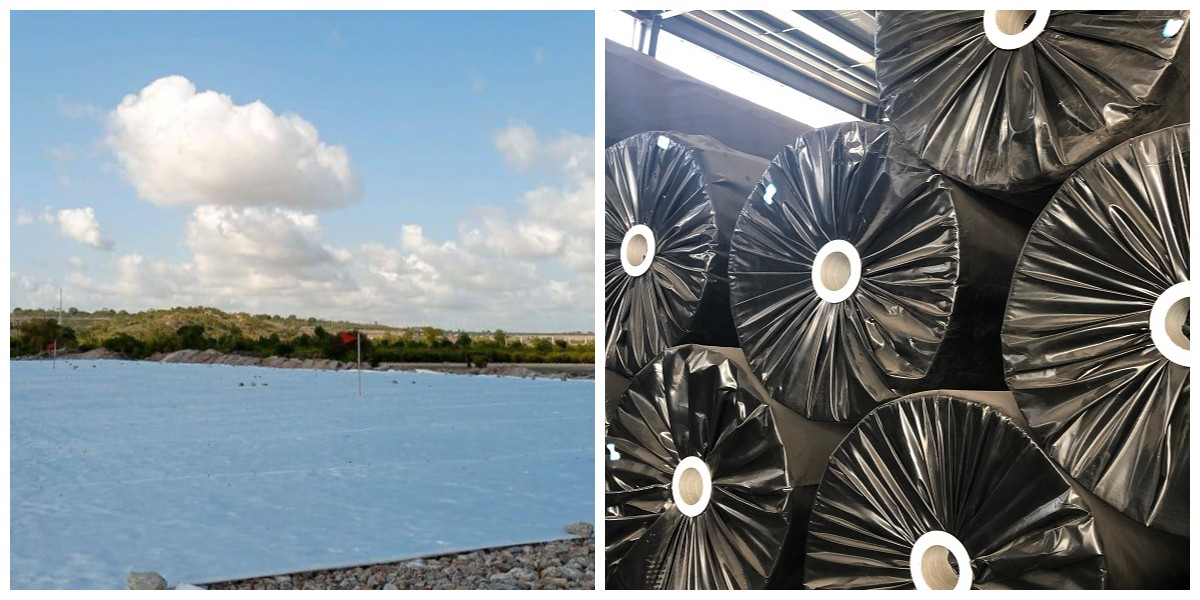
• Standard Packaging:
◦ Roll specifications: Width 2-6m, length 50-100m (customizable); inner layer wrapped with moisture-proof plastic film.
◦ Outer packaging: Heavy-duty woven PP bags or waterproof kraft paper, reinforced with steel straps to prevent roll damage during transit.
◦ Labeling: Each roll is marked with product details (material, type, tensile strength, batch number, certification logos like ISO, CE, ASTM).
• Export Logistics:
◦ Container shipping: FCL (20ft/40ft containers) for bulk orders, LCL for small batches; rolls are palletized for easy loading/unloading.
◦ Documentation: Commercial invoice, packing list, certificate of origin, quality inspection report, and compliance certificates (e.g., REACH for EU, FDA for the US).
◦ Customized Services: OEM packaging (printed company logos, custom roll sizes) and pre-shipment inspection coordination to meet client requirements.