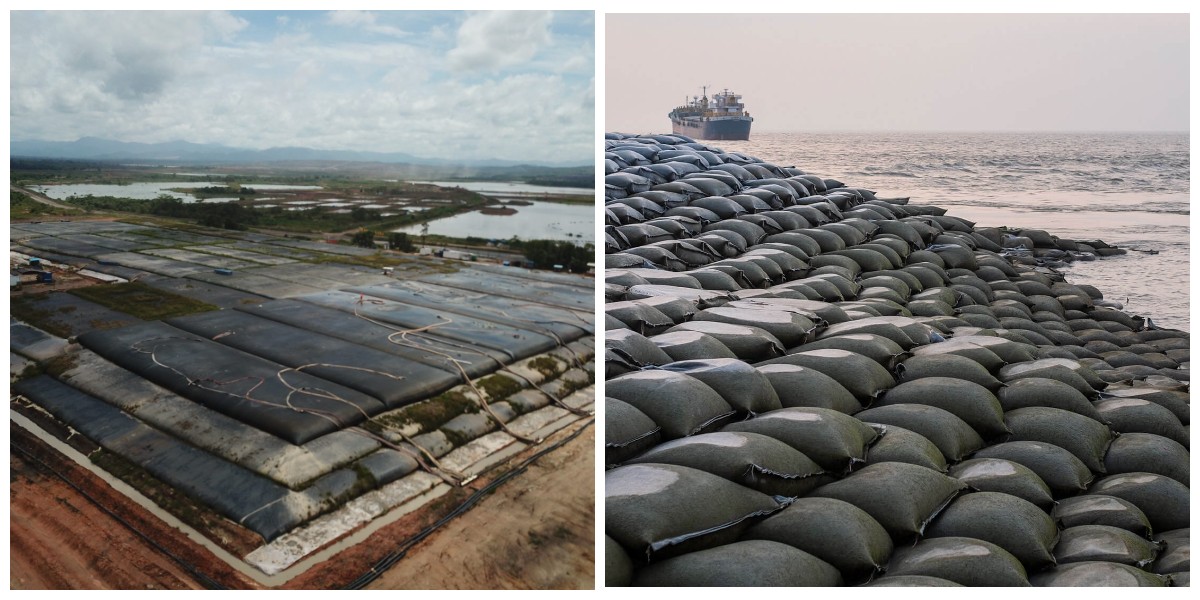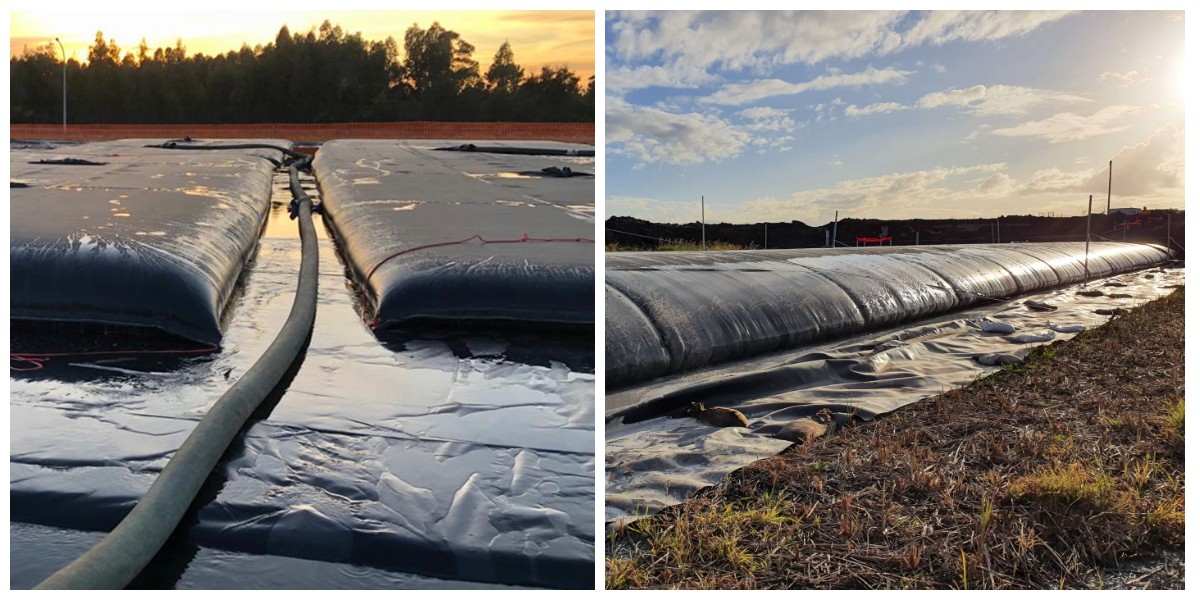
Dewatering geobag geotube
High strength woven geotextile
Length up to 100 meters; Circumference up to 36 meters
Effectively drains out silt, sediment, sludge, and contaminated waste
Reliable using in all weather conditions
Reduces risks in operational safety
Designed for large dewatering projects
Custom size fits applications of structures and dewatering area
After weeks to fairly dry, It’s easy removal and disposal of solids
Environmental friendly reduces carbon footprint
Cost effective and low maintenance
Dewatering geobag geotube
Description:
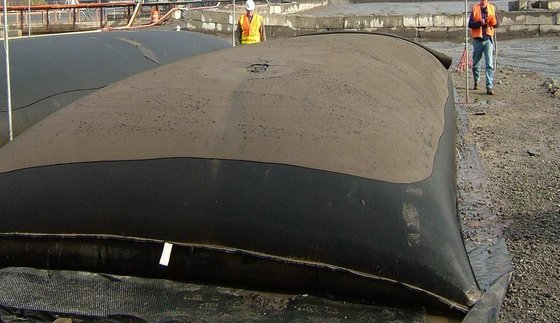
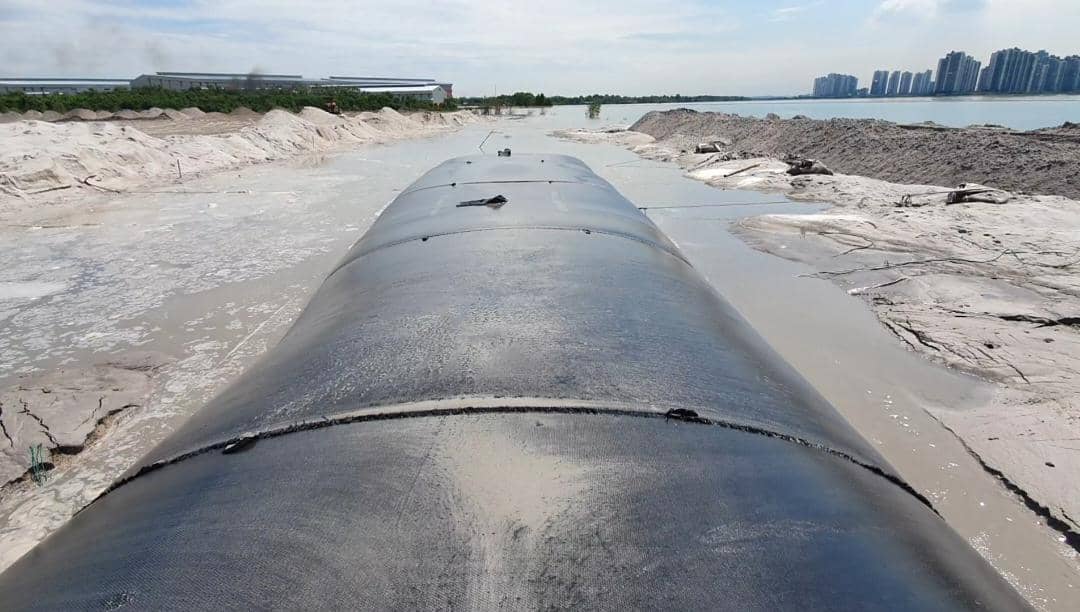
Geobags are also known as dewatering bags, geotextile tubes, geocontainers, soil tubes, geosynthetic tubes or desludging bags. They are made of high strength polypropylene woven geotextile that resists ultraviolet, environment rotting, and biological degradation. They are inert to most naturally encountered chemicals, alkalis, andacids.Historically, they have been used to contain sandy soils to permit their use as flexible, erosion resistance, mass gravity structures in hydraulic and marine applications.
More recently, geobags have been used of disposing and dewatering various waste streams and contaminated sediments.

Features&Benefit
High flow rate allows residual materials to dewater, whilst containing solids
Simple to use as there are no mechanical or moving parts that could breakdown or wear and tear
Custom fabricated with seaming techniques that withstand pressure during pumping operations
The effluent is filtered water that can be reused or returned to native waterways without further treatment
Available in many sizes, depending on volume and space requirements
Supported by design advice and guidance on polymer use for your sludge
Application
Geobags For Hydraulic Structural
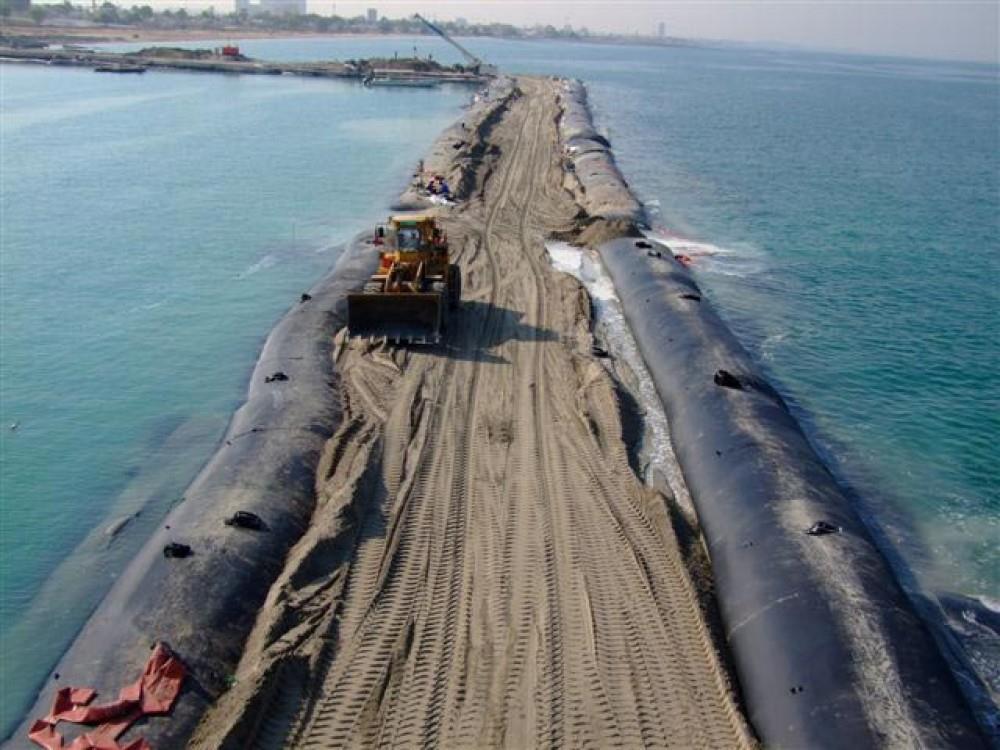
Revetment:Geobags often filled with sand slurry for used as revetment structures. They are used for both submerged and exposed revetments. For submerged revetments the geobag is always covered by local soil. For exposed revetments, the geobag is exposed throughout it’s design life. To prevent erosion of the foundation, the geobag is always to install a scour apron, which is anchored by a small geobag(geotextile tube), we call it ‘anchor tube’. Revetments are also constructed using multiple geobag layers.
Breakwaters:
Geobags are used for offshore breakwaters to prevent the erosion behind shoreline developments. It is located at a certain distance from offshore in order to weak or eliminate wave energy before they can reach the shoreline. When planning a project that involves geobag breakwaters, it’s crucial to consult with engineers and environmental experts to design a system that meets both the protective needs and environmental considerations of the specific locationDykes, Groynes :Geobags are used for protection dykes, where they prevent flood and storm damage to valuable structures. They can also used for river, lake works. When geobag protection dykes are constructed, always it is covered by local soil. Thereby ensuring no damage caused by activities and long term sunlight exposure. Once geobags are used for river or lake works, it is always leave them exposed except for major structures, where rock armour layers may be placed over it to dissipate hydraulic forces.
Geobags For Sludge Dewatering
Municipal Waste,Most municipal sewage treatment plants store the generated sludge in ponds. Geobags are used extensively for dewatering sludge from these containment ponds. The effluent water is normally back to the ponds, and solids disposed of elsewhere. For the limited space available, many customers use small size geobag, which can put into ‘rectangle steel box’ and can be easy moved by truck. It is also called MDS dewatering system.
Mine Sludge, Small tailings, which are close to population or environmentally sensitive areas. In many cases the tailings have to be dewatered first before they can be rendered stable and inert. These sludges can be effectively managed with geobag dewatering technology.
Contaminated Sediments, The contaminated sediments are always come from industrial effluent waste that settle into rivers, lakes, ponds and streams within timeby. They are such as: PCBs, PCPs, PAHs, lead, copper, zinc, arsenic and etc. These contaminants are harmful to humans, animals and aquatic lifes. Environmental dredging is the most common method of contaminated sediment remediation. The sediment is dredged and pumped into geo tube and transported after weeks or months consolidation.
Industrial Waste,Many industrial processes produce waste which is stored in waste ponds on the industrial site. Over time these ponds fill with waste sludge, and have to be cleaned to continue function. A common method of these waste reclamation is to dewater the waste sludge using geobag dewatering technology from ponds and dispose of it in landfill or use it for other applications.
Food Processing Waste,Food processing produces large quantities of slurry waste, which comes from manufacturing process such as Potato Processing(washing and skin waste), Cheese Processing, Wine Processing and etc. Slurry waste stored in sedimentation pond and need to be dewatered periodically.