
Wastewater Treatment Plant
Geomembrane Application in Grayling Wastewater Treatment Plant
Project Background
Located in a region where high-quality clay for traditional liners was scarce and costly, the Grayling Wastewater Treatment Plant launched a 1.6 million square foot expansion in 1991. The project, designed by Richards and Associates and constructed by De Vere Construction, aimed to add a new 15-acre secondary pond and a 20-acre holding pond to enhance wastewater treatment capacity. To meet strict environmental containment standards, Environmental Protection, Inc. (EPI) was commissioned to design and install a high-performance geomembrane system.
Geomembrane System Selection & Design
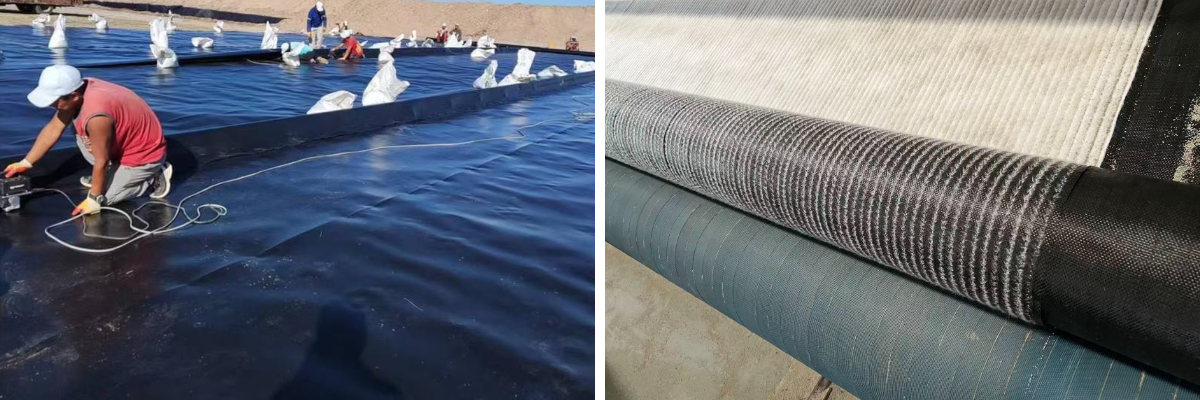
Given the site’s geological constraints and the need for long-term leakproof performance, a composite geomembrane system was adopted, combining two key components:
1. Gund Seal GCL (Geosynthetic Clay Liner): Serving as the primary barrier, it featured a 20-mil smooth HDPE layer and granular bentonite applied at 4.9 kg/m². The HDPE side was installed downward for structural stability, while the bentonite side faced upward to act as a self-sealing backup.
2. 40-mil PVC Geomembrane: Laid directly atop the GCL, it provided a secondary impermeable layer. Fabricated in large panels, it enabled rapid installation—critical for protecting the GCL from inclement weather—and its low thermal expansion coefficient prevented daytime temperature-induced "waves," ensuring tight contact with the underlying bentonite.
To reinforce the lagoon side slopes (a high-risk area for erosion and membrane damage), an 8 oz/sq. yd non-woven geotextile, a uniaxial reinforcing geogrid, and 8 inches of stone cover were added. The lagoon bottom was lined with 12 inches of sand to cushion the geomembrane against sharp debris.
Project Performance & Outcomes
Since its commissioning in 1991, the geomembrane system has delivered 32+ years of leak-free, trouble-free operation, exceeding initial performance expectations:
• Environmental Safety: No wastewater seepage has been detected, protecting local soil and groundwater from contamination—even amid regular wastewater treatment cycles.
• Durability Under Stress: The composite system has withstood temperature fluctuations, chemical exposure from treated wastewater, and mechanical stress from maintenance activities without cracking or seam failure.
• Cost Efficiency: By eliminating the need for expensive clay liner sourcing and reducing long-term maintenance (e.g., no repairs to the geomembrane have been required), the system has cut lifecycle costs by an estimated 35% compared to traditional clay-based designs.