
Highway Subgrade Drainage
Non-Woven Geotextile for Filtration in Highway Subgrade Drainage
Project Overview
The Northridge Highway Expansion Project, spanning 18 kilometers in a hilly region prone to seasonal heavy rainfall, faced critical challenges with subgrade stability and waterlogging. The subgrade soil consisted of fine sand and silty clay—prone to particle loss and clogging of drainage systems when exposed to water. To protect the subgrade structure, prevent soil erosion, and ensure long-term drainage efficiency, non-woven polypropylene geotextiles were adopted as the core filtration solution for the project’s lateral drainage network.
Geotextile Selection & Technical Requirements
After soil composition analysis and hydraulic performance testing, the project selected 300g/m² needle-punched non-woven geotextiles with the following key properties:
• Permeability: ≥5×10⁻³ cm/s (ensuring rapid water infiltration)
• Effective opening size (EOS): 0.15-0.25mm (retaining fine soil particles while allowing water flow)
• Tensile strength: ≥18kN/m (MD/TD) (withstanding subgrade settlement and construction stress)
• Chemical resistance: Resistant to soil acids, alkalis, and microbial degradation
Application Scenario & Implementation Process
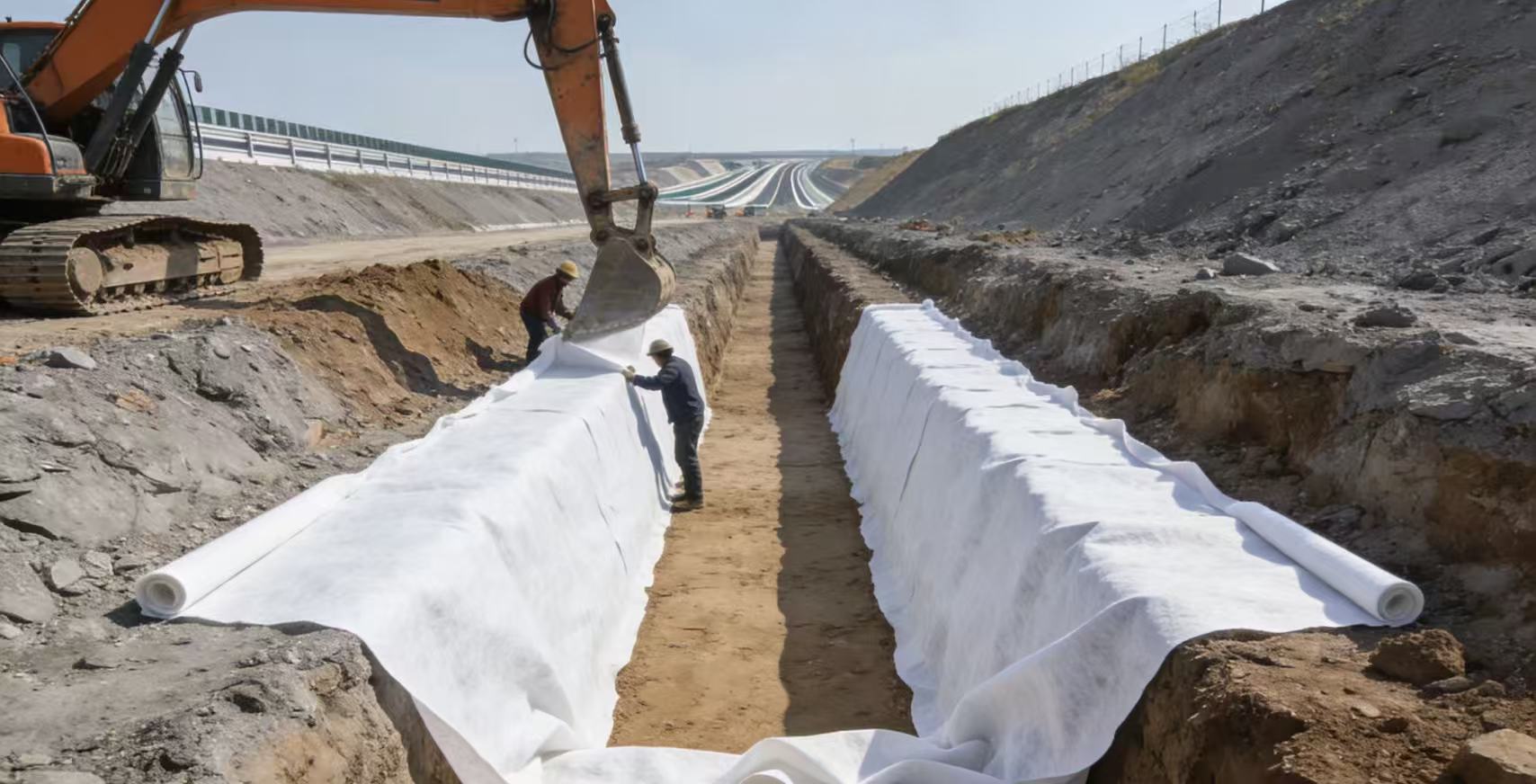
The geotextiles were primarily used in the highway’s lateral drainage trenches (installed along the subgrade shoulders) and beneath the aggregate base course, following these steps:
1. Trench Preparation: Excavated drainage trenches (50cm wide × 60cm deep) were leveled and compacted to remove sharp rocks and debris.
2. Geotextile Lining: The non-woven geotextiles were laid to fully line the trenches, with 20cm overlaps at seams to avoid gaps. The geotextile extended 15cm beyond the trench edges to cover the adjacent subgrade surface.
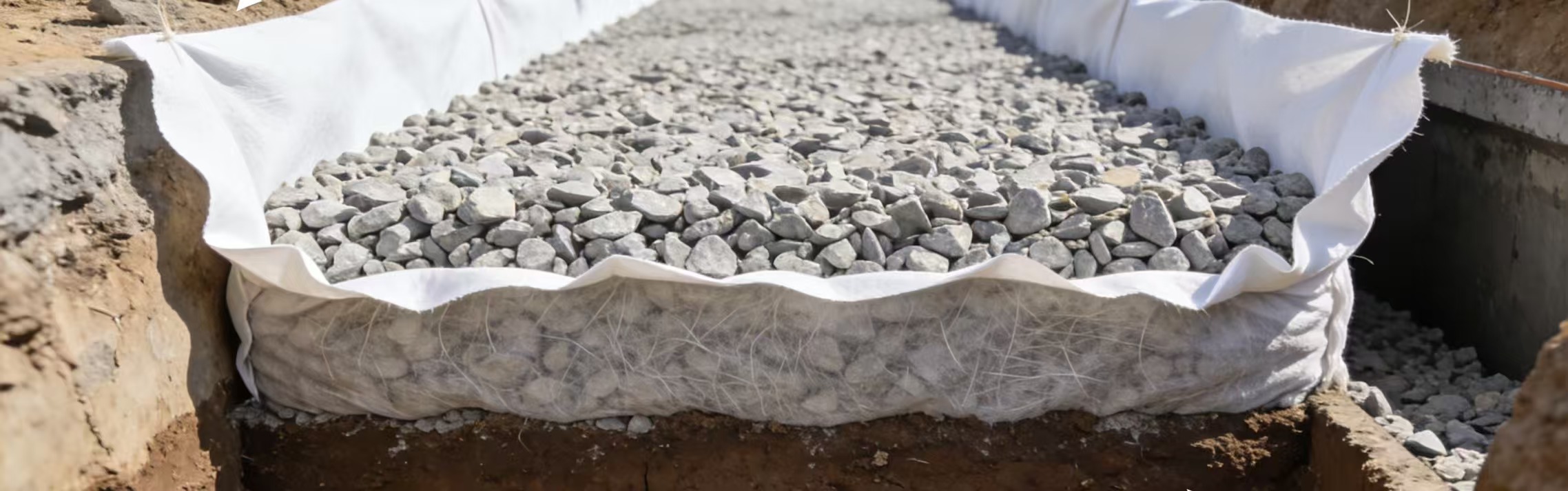
3. Aggregate Placement: 40cm-thick graded gravel (10-20mm particle size) was placed atop the geotextile as the drainage medium, ensuring uniform distribution without damaging the geotextile.
4. Sealing & Backfilling: The geotextile was folded over the gravel layer to form a "pouch" structure, preventing soil particles from entering the aggregate. The trenches were then backfilled with compacted subgrade soil.
Project Outcomes & Performance Benefits
Since the highway’s opening in 2022, the geotextile filtration system has delivered outstanding results:
• Effective Soil Retention: No clogging of the gravel drainage layer has been detected. Post-inspection showed the geotextile successfully retained 99% of fine soil particles, while allowing unobstructed water flow.
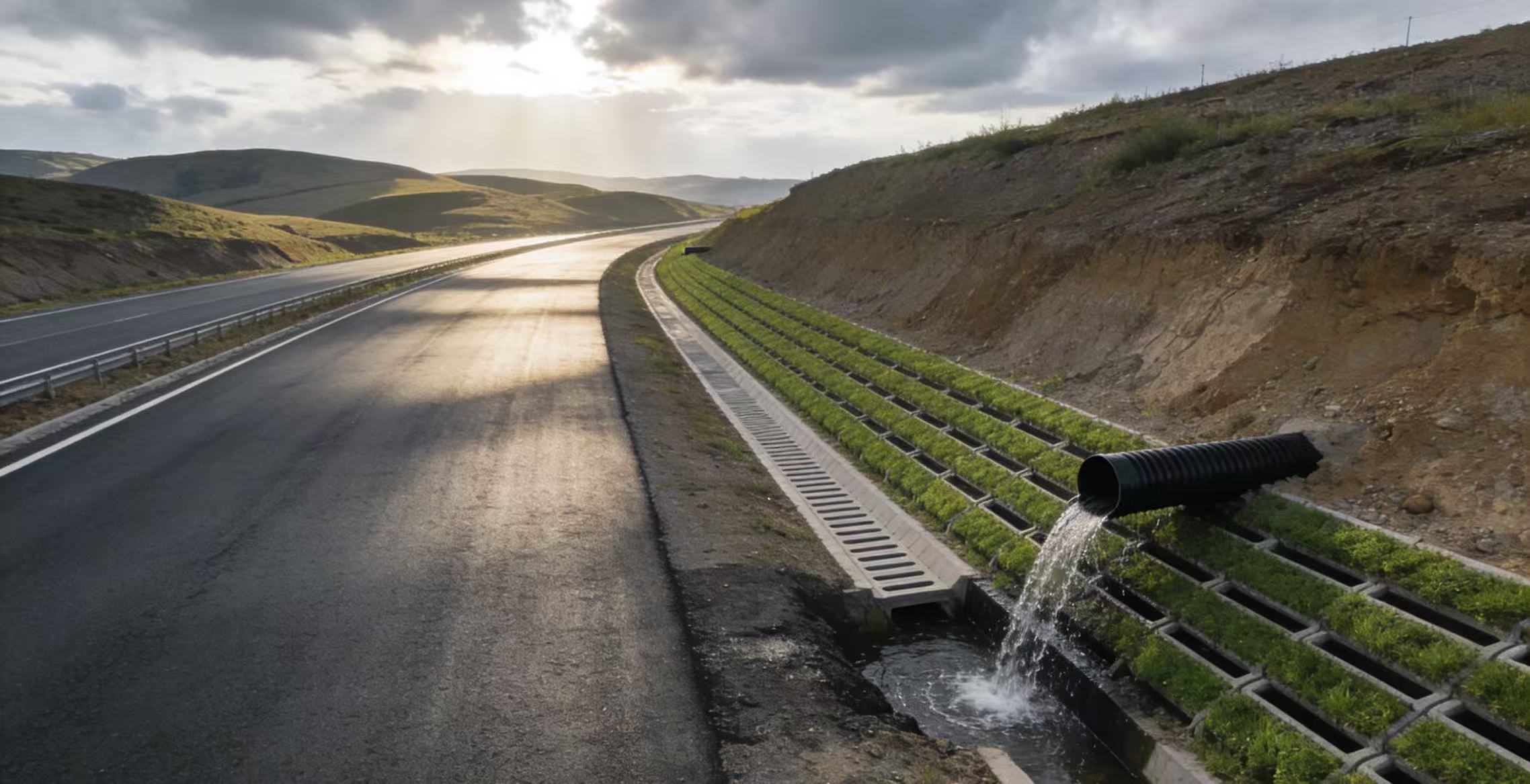
• Enhanced Drainage Efficiency: The lateral drainage system reduces subgrade water content by 65% within 24 hours of heavy rainfall, eliminating waterlogging and minimizing the risk of subgrade softening.
• Improved Subgrade Stability: The geotextile’s reinforcement effect (reducing soil displacement) has reduced pavement settlement by 80% compared to sections without geotextile filtration, extending the highway’s service life by an estimated 10 years.
• Cost Savings: By avoiding drainage system maintenance and subgrade repairs, the project saved approximately $420,000 in the first two years of operation, with long-term lifecycle cost reductions of 30% compared to traditional filtration methods (e.g., straw mats or unfiltered gravel).
Conclusion
This case highlights the vital role of non-woven geotextiles in highway subgrade filtration and drainage. By effectively separating soil particles from drainage media, the geotextile ensures sustainable drainage performance, protects subgrade integrity, and delivers significant economic and operational benefits. It serves as a replicable model for infrastructure projects in areas with problematic soil and high rainfall.