
Municipal Landfill Project
Geomembrane Application Case in a Municipal Landfill Project
Project Overview
Located in a suburban area of a mid-sized city, the Greenfield Municipal Landfill covers a total area of 45 hectares with a designed waste disposal capacity of 3.2 million cubic meters. The project aimed to address the city’s growing waste management needs while minimizing environmental impacts, particularly groundwater contamination and soil pollution. To meet strict environmental protection standards, a high-performance geomembrane system was adopted as the core anti-seepage solution.
Geomembrane Selection and Technical Specifications
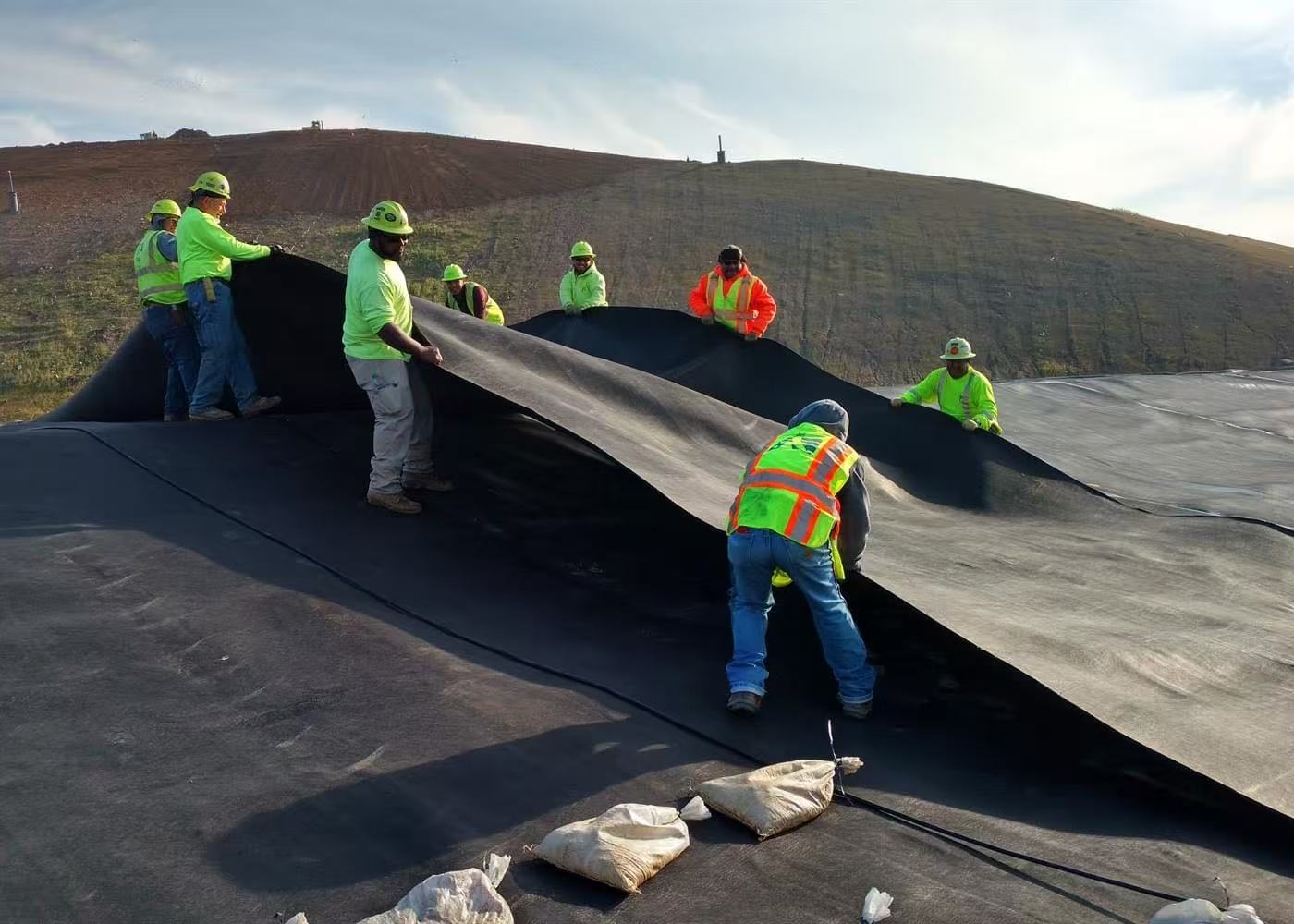
After comprehensive geological surveys and environmental risk assessments, the project selected HDPE (High-Density Polyethylene) geomembranes with a thickness of 1.5mm as the primary anti-seepage material. Key technical parameters included:
• Tensile strength: ≥28MPa (MD/TD)
• Elongation at break: ≥700%
• Impermeability coefficient: ≤1×10⁻¹³ cm/s
• Chemical resistance: Compatible with leachate components (organic acids, heavy metals, and salts)
Additionally, a non-woven geotextile (300g/m²) was used as a protective layer to prevent geomembrane damage from sharp waste edges and geological unevenness.
Construction Process and Quality Control
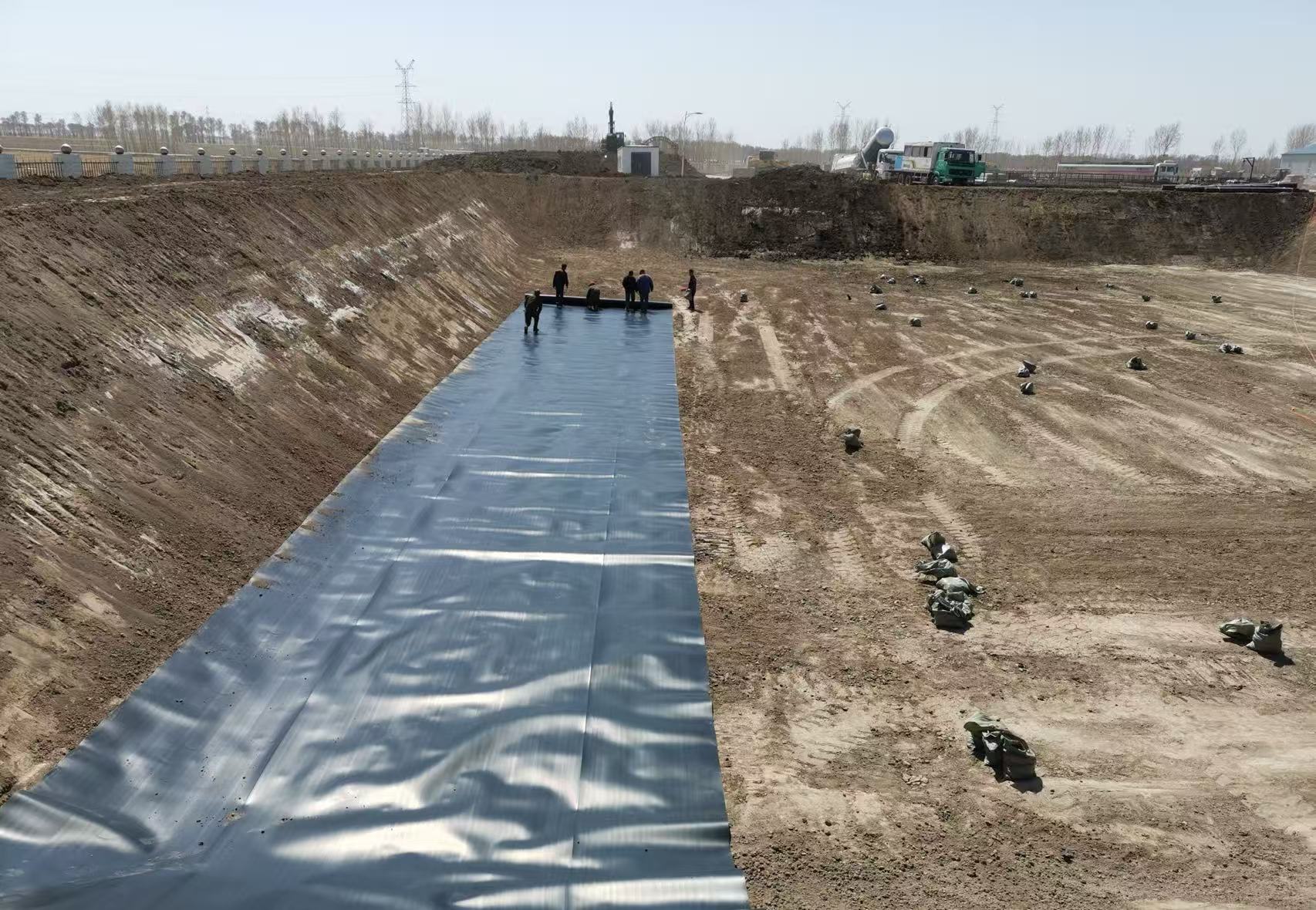
1. Site Preparation: The landfill base was leveled, compacted (compaction degree ≥93%), and cleared of debris to ensure a smooth, stable foundation.
2. Geotextile Laying: The non-woven geotextile was laid in an overlapping manner (overlap width ≥15cm) and fixed with anchor bolts to avoid displacement.
3. Geomembrane Installation: HDPE geomembranes were deployed horizontally, with thermal welding used for seams (welding temperature: 200-220℃, welding speed: 2-3m/min). Each weld was inspected using a vacuum tester to ensure no air leakage (test pressure: 0.02MPa).
4. Edge Sealing and Protection: The geomembrane edges were anchored to concrete retaining walls with stainless steel fasteners, and a 50cm-thick soil layer was backfilled as a secondary protective barrier.
Project Outcomes and Environmental Benefits
Since its commissioning in 2021, the landfill has operated safely for over three years, achieving remarkable environmental and operational results:
• Zero Groundwater Contamination: Regular monitoring of groundwater wells around the landfill showed no detectable leachate components, meeting national drinking water quality standards.
• Leachate Collection Efficiency: The geomembrane system effectively directed leachate to the collection pipeline network, with a collection rate of 98%, reducing the risk of soil salinization.
• Long-Term Durability: No geomembrane damage, cracking, or seam failure has been reported, confirming the material’s resistance to UV radiation, chemical corrosion, and mechanical stress.
• Cost-Effectiveness: Compared to traditional clay liners, the geomembrane system reduced construction time by 40% and long-term maintenance costs by 35%, while extending the landfill’s service life by 8 years.
Conclusion
This case demonstrates the critical role of HDPE geomembranes in modern landfill anti-seepage engineering. By combining scientific material selection, strict construction quality control, and systematic monitoring, the project successfully balanced waste disposal efficiency and environmental protection. It provides a replicable model for similar landfill projects seeking to mitigate environmental risks and achieve sustainable waste management.